Learn more

Learn more
Learn more
Philodendron 'Green Beauty'

Why the Philodendron 'Green Beauty' makes a great office plant
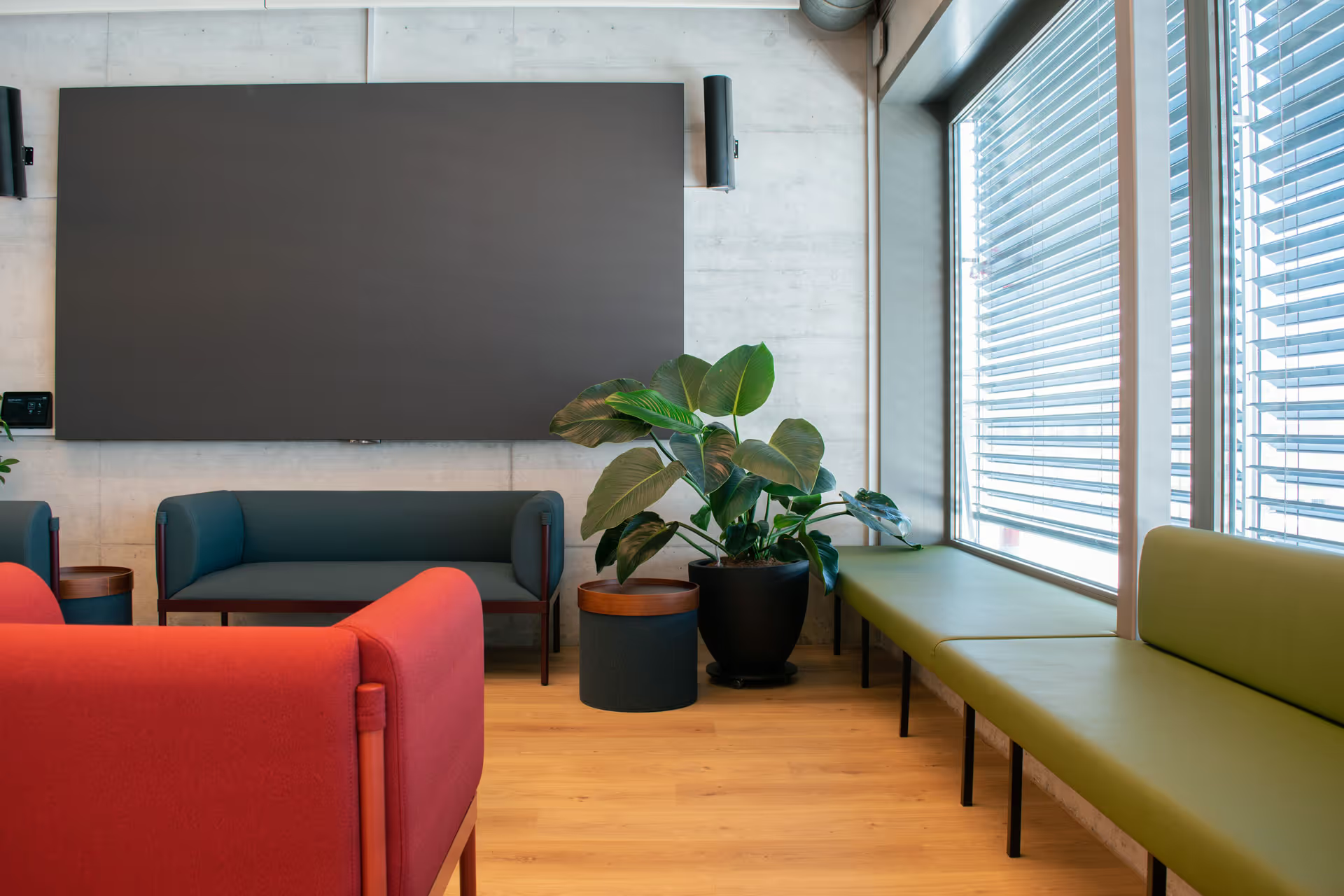
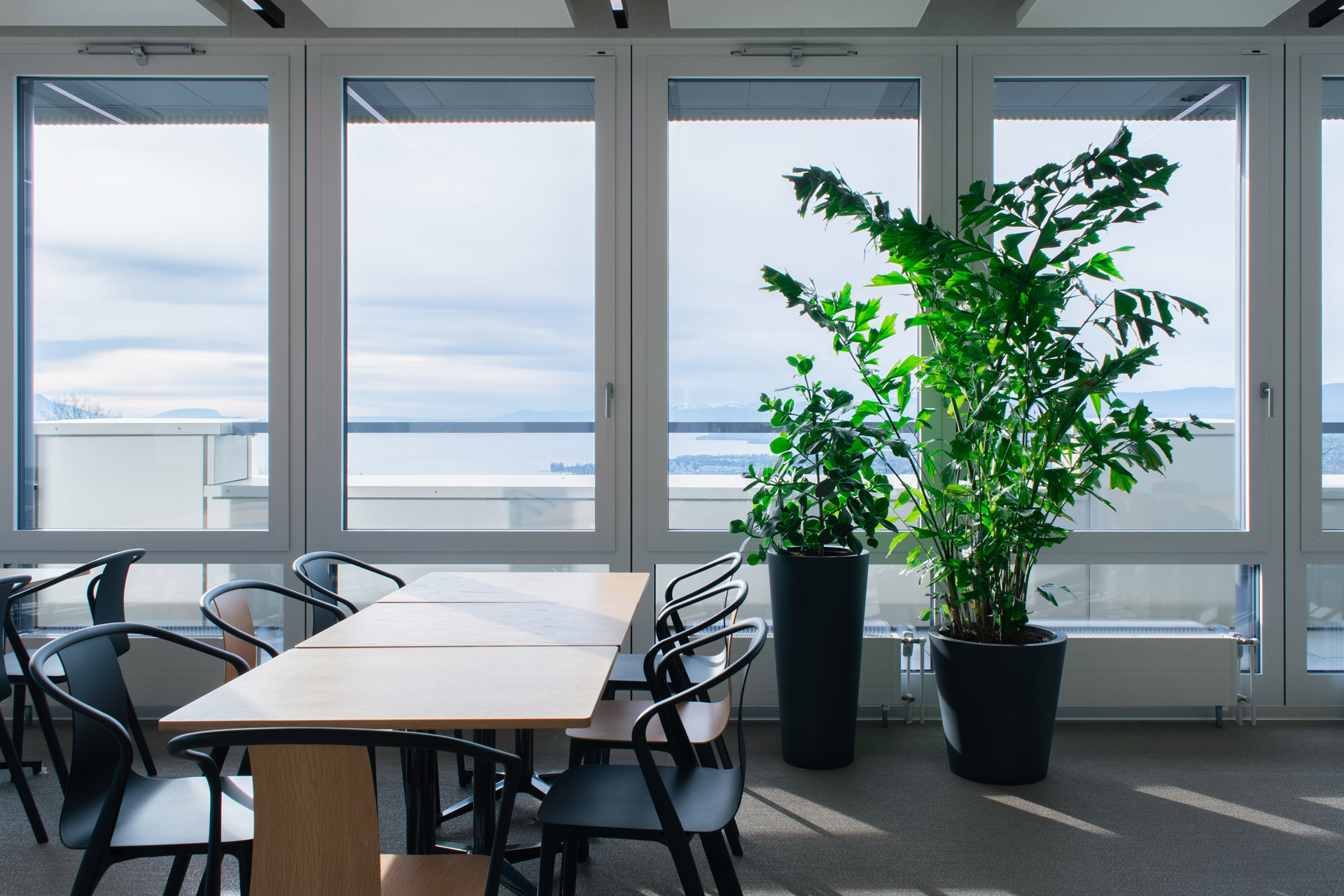
There is something irresistibly charismatic about the Philodendron ‘Green Beauty’. It has that graceful, quietly confident presence that instantly softens an office landscape. With its deep green to blue-green leaves, glossy enough to catch the light but never flashy, the plant brings a grounded elegance that feels both modern and timeless.
All you need to know about the Philodendron 'Green Beauty'
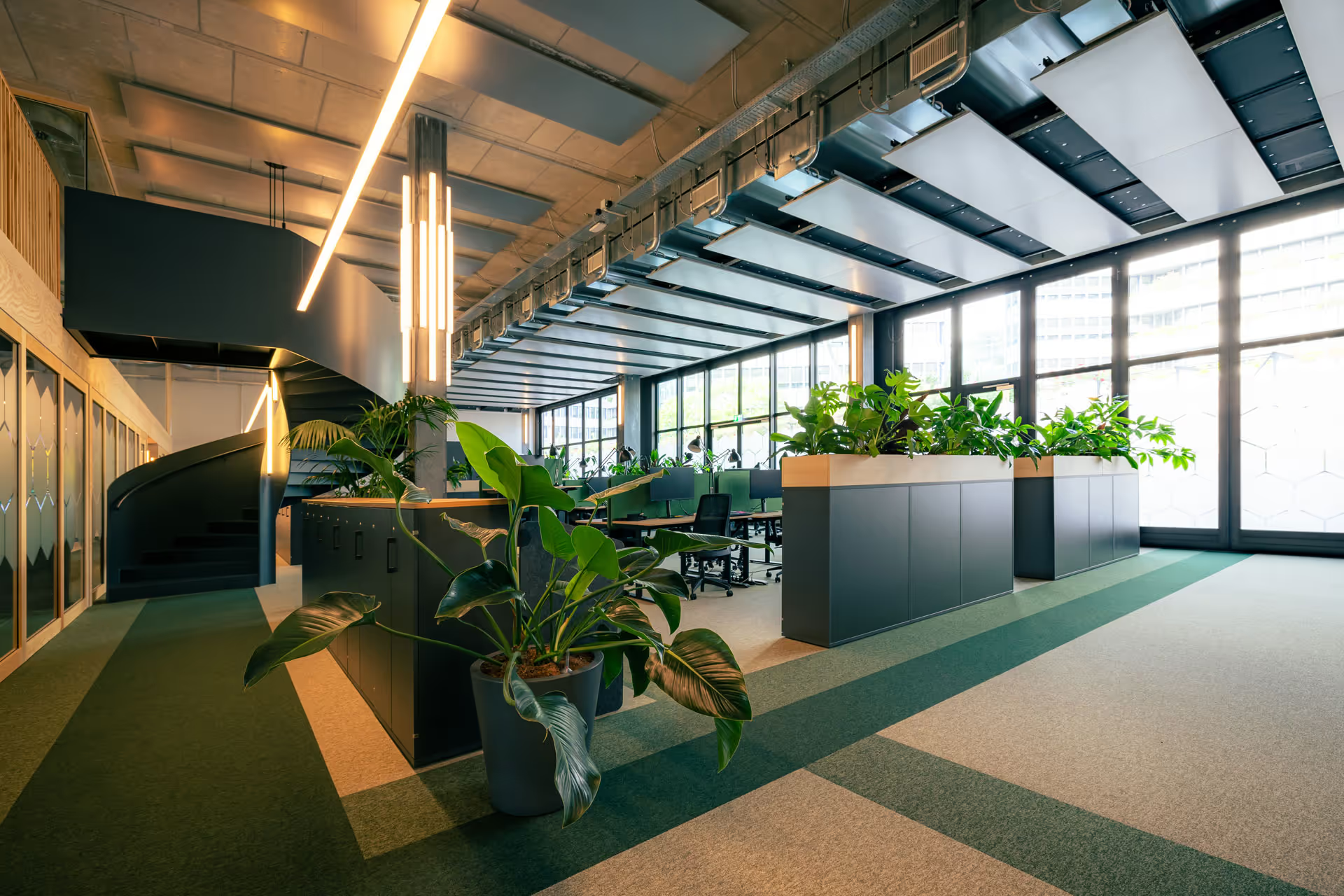
Each leaf, often reaching up to 30 centimetres, unfurls like a sculptural gesture that adds dimension to the room without overwhelming it. Its generous proportions make it ideal for workplace interiors. Standing at around 110 centimetres in height and spreading to about 90 centimetres in width, the plant offers volume without requiring excessive footprint. Its softly arching growth can naturally define zones within open-plan spaces, creating a subtle sense of structure without the need for physical partitions. The effect is a more welcoming, calming rhythm throughout the office.
The Philodendron ‘Green Beauty’ thrives particularly well in the kind of light available in most professional environments. It prefers indirect illumination and steady indoor temperatures, conditions commonly found in offices. Since it does not produce pollen and grows quietly without sudden leaps, it suits shared workspaces and meeting areas where tranquillity and cleanliness are valued. The absence of blooms also keeps its aesthetic consistent throughout the year. All these characteristics make this species a dependable companion for contemporary workplaces looking to infuse nature into daily routines.
The origins of the Philodendron ‘Green Beauty’ lie in the humid, shaded understory of the Central and South American rainforest. In its natural habitat, it grows beneath the dense canopy, stretching its climbing stems and aerial roots toward the filtered light that reaches the forest floor. The species’ name, derived from the Greek words for love and tree, hints at its versatility. In nature it holds on lovingly to trunks and branches, yet it is equally capable of forming a self-supporting shrub on the ground.
Indoors the plant shows a preference for gentle light and consistent warmth. It is a species that responds well to steady humidity and appreciates stable room conditions, reflecting the quiet reliability of its rainforest origins.
Under what conditions does the Philodendron 'Green Beauty' thrive?
Watering
The plant should be watered in a way that mirrors the moisture patterns of its natural habitat. Occasional short dry periods can be tolerated, yet it should be ensured that the root environment never remains dry for extended intervals.
Fertilizing
The plant should receive nutrients in modest amounts. It should be ensured that fertilization remains balanced, since excessive feeding is unnecessary and does not reflect the nutrient-light forest soils where the species evolved.
Cutting
Cutting should be approached with subtlety. The plant should be pruned only to maintain shape or to guide its natural tendency to climb and spread.
Other Care
It should be ensured that the plant is kept in a warm, humid environment reminiscent of tropical understory conditions. Occasional support for its aerial roots can help preserve its natural character as a climber. Its evergreen foliage benefits from a setting that allows generous airflow around the leaves.
How much water is evaporated by the Philodendron 'Green Beauty'?
“Using research, real life tests, and office air quality data, we approximate the effect of different plant species. Of course, the actual effect can vary depending on things like room conditions and the plant’s overall health.” Georges , Data Project Manager
With its generous foliage and near one-square-metre leaf surface, the Philodendron ‘Green Beauty’ plays an active role in indoor humidity. In Oxygen at Work’s measurements, a plant of approximately 110 centimetres in height and 90 centimetres in width evaporates around 1.6 litres of water per month. This places it slightly below the well-known Howea forsteriana, which reaches 2.1 litres per month at a height of 1.90 metres and a width of 0.7 metres. The comparison highlights how efficiently the ‘Green Beauty’ contributes to improved indoor air conditions despite its more compact stature.
This evaporation process helps soften the often dry atmosphere of offices. By releasing moisture in steady, rhythmic amounts, the plant supports a more balanced indoor climate. The data reflects Oxygen at Work’s commitment to understanding plant performance not only through horticultural expertise but also through scientific measurement. The result is a uniquely evidence-based approach to designing greener, healthier workplaces.
An average Philodendron 'Green Beauty' in numbers
Height: 110 cm
Width: 90 cm
Leaf Surface: 0.9 m²
Monthly Water Evaporation: 1.6 l
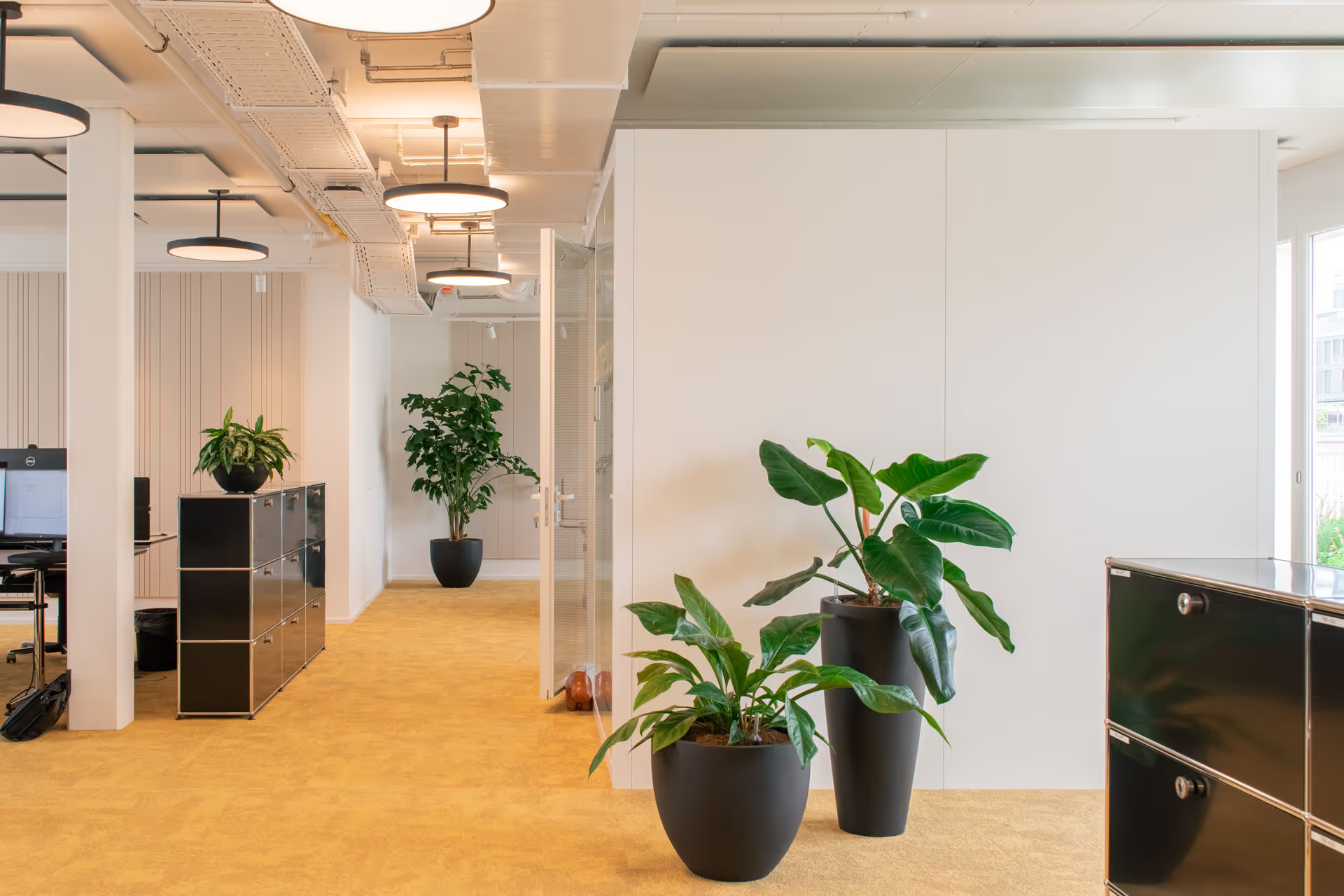
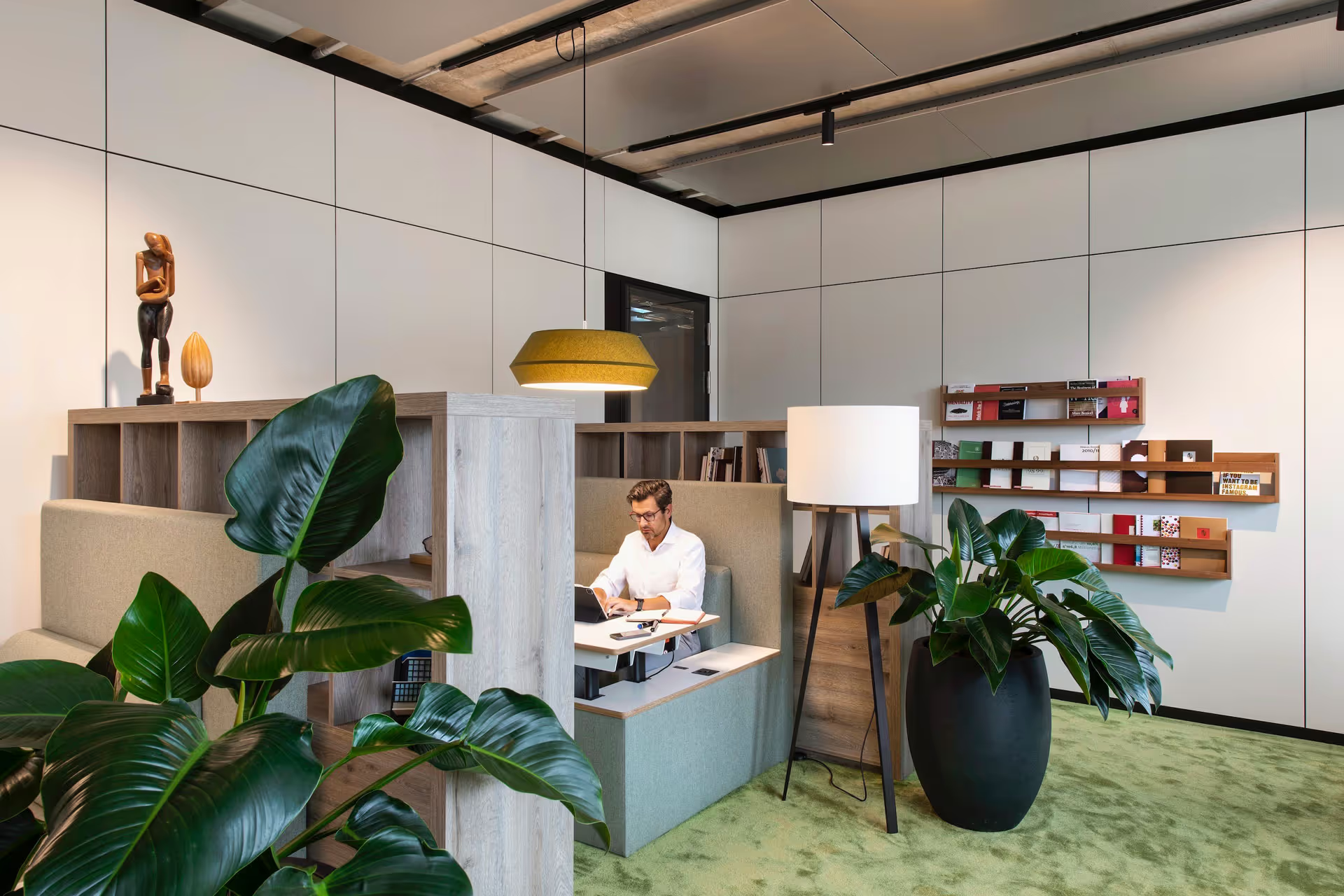
Yes. The plant naturally grows in the shaded understory of tropical forests, which makes it well adapted to indoor environments with indirect light. It performs reliably in offices that do not receive strong direct sunlight.
It typically reaches around 110 centimetres in height and about 90 centimetres in width. Under stable indoor conditions it forms a substantial, bushy shape with large leaves that sustain its visual presence.
The plant contributes to indoor humidity by evaporating approximately 1.6 litres of water per month. This aids in creating a more comfortable atmosphere, particularly in spaces where air tends to become dry.
In professional settings the plant is well suited because it produces no pollen and maintains a clean, evergreen appearance. It is a quiet, stable species that fits seamlessly into shared workspaces.
Its deep green to blue-green leaves have a glossy finish and can reach up to 30 centimetres, creating a lush, sculptural look. The combination of large foliage and elegant growth habit gives the plant its notable aesthetic character.