Learn more

Learn more
Learn more
Aspidistra elatior

Why the Aspidistra elatior makes a great office plant
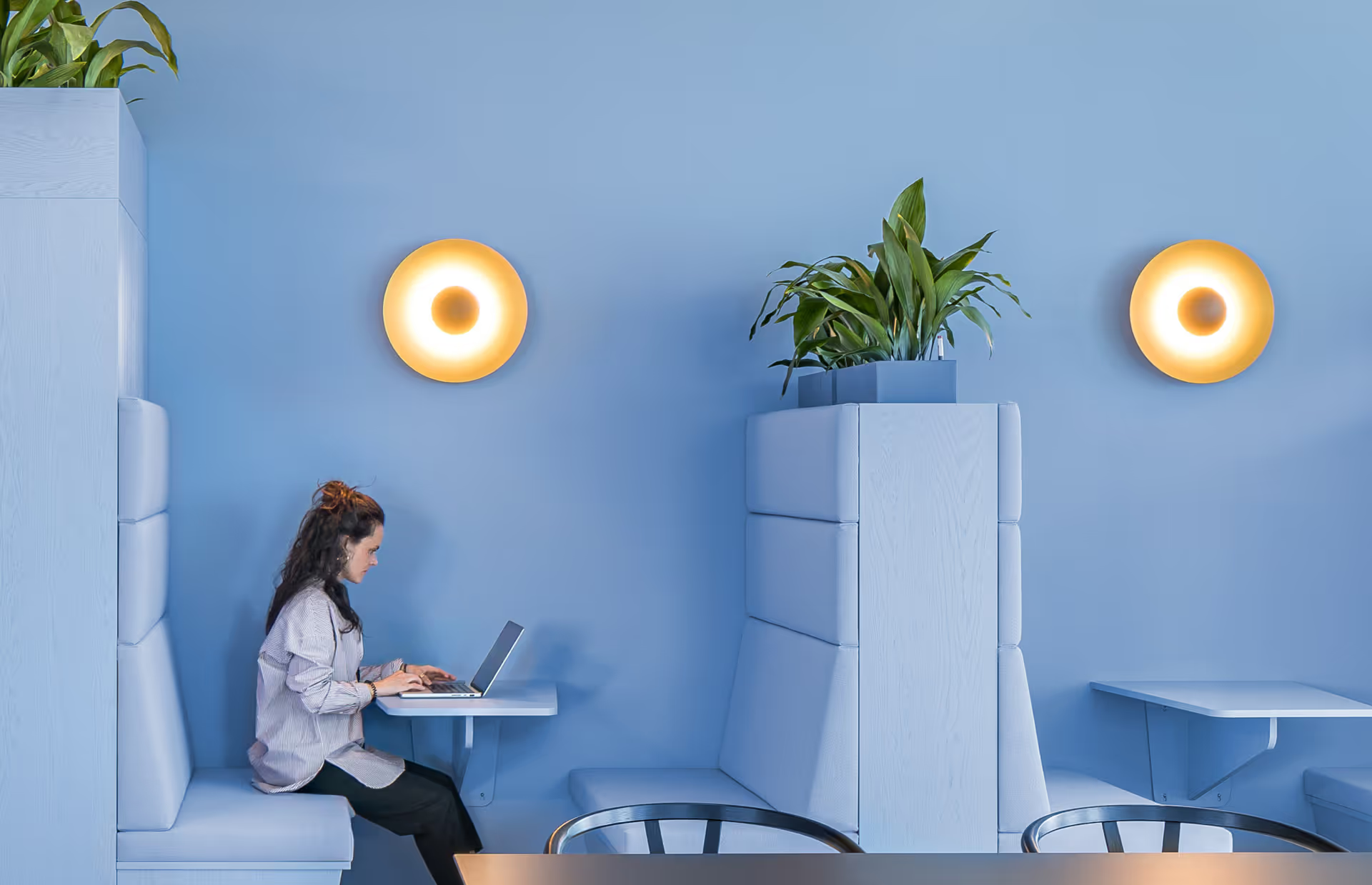
The Aspidistra elatior has the kind of quiet charisma that turns heads without ever asking for attention. In offices where life happens in bursts of meetings, Slack pings and project deadlines, this plant sits in dignified stillness, dressed in deep green. Its arching leaves rise from the soil like satin ribbons, giving it a sculptural elegance that complements both minimalist workspaces and busier corporate environments. Part of its charm lies in its self-possession.
All you need to know about the Aspidistra elatior
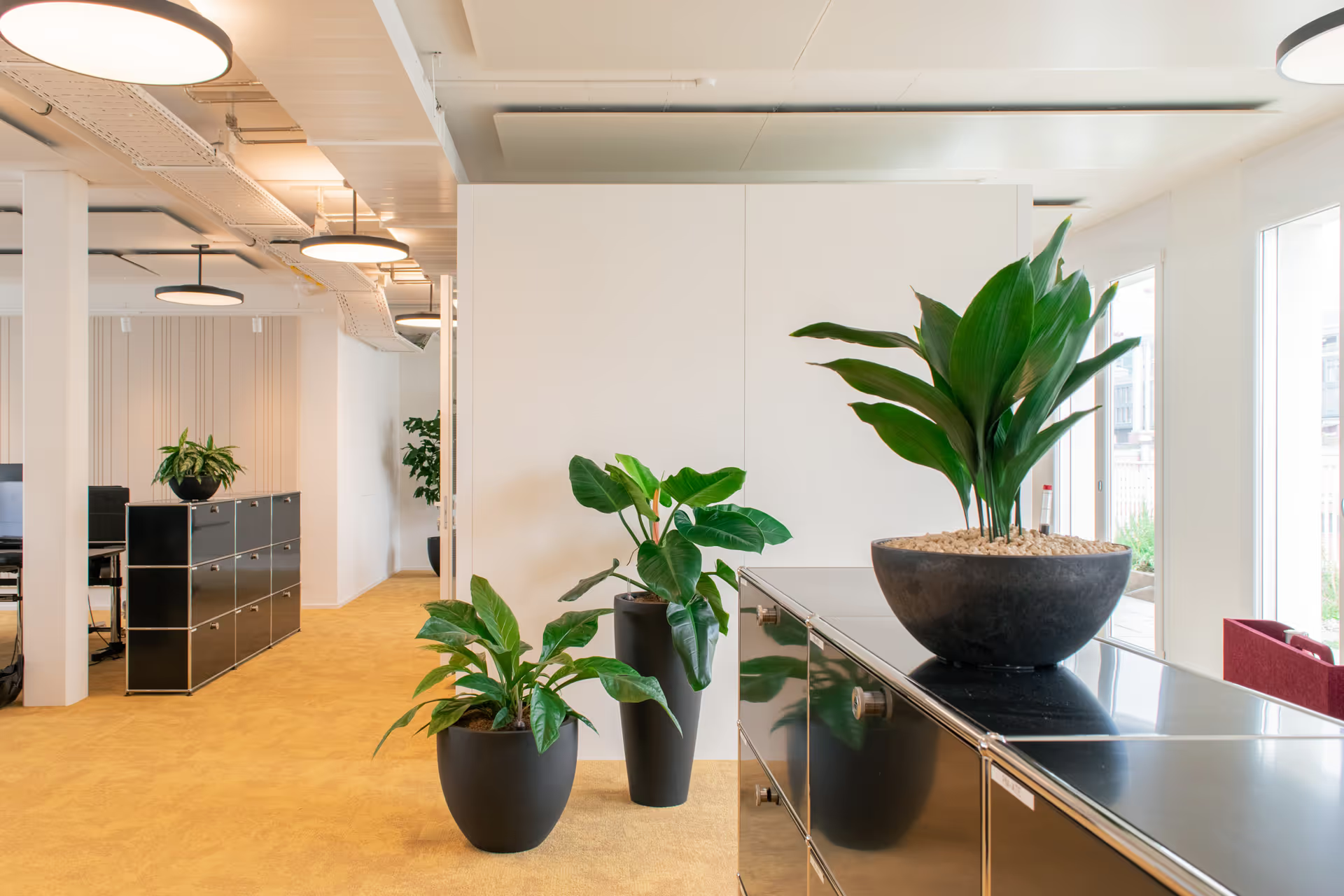
With a height of around 80 cm and a width of about 35 cm, it provides a vertical accent without overwhelming desks or collaboration corners. The leaf surface, a generous 0.535 m², creates a harmonious presence in offices that favour understated greenery. The Aspidistra elatior does not bloom in eye-catching colours and has no pollen, making it an excellent fit for shared working environments where sensitivities and allergies must be considered.
What makes the Cast Iron Plant truly remarkable is its talent for handling standard office conditions with ease. Shade and lower light intensities, the kind often found in interior corridors or farther from windows, are precisely the niches this plant has mastered. Its calm growth pattern means no sudden surprises in size, and its robust form makes it suitable as a subtle space divider in meeting corners or lounge areas.
In short, the Aspidistra elatior offers a blend of resilience, elegance and tranquility that enriches modern office design. It feels as though it has always belonged to the indoor workspace, simply waiting to be noticed.
To understand why the Aspidistra elatior performs so consistently indoors, it helps to imagine its homeland. Originating in the shaded forests of Japan and Taiwan, the plant inhabits areas with subdued light, cool temperatures and naturally high humidity. These forest floors offer filtered sunshine, moist soil and a calm microclimate that mirrors the deeper layers of many office spaces.
The Aspidistra elatior is naturally inclined to handle fluctuations and wait patiently between favourable periods. Its thick, leathery leaves reflect this evolution, allowing it to store resources and maintain a dignified appearance even in less-than-ideal conditions. Partial shade and indirect light replicate the forest setting well, and moderate indoor temperatures create an environment in which the plant can grow slowly but steadily.
Under what conditions does the Aspidistra elatior thrive?
Watering
The plant should be watered according to its exposure level. It should be ensured that the substrate remains moderately moist, particularly in brighter surroundings. In lower light, the soil should dry more slowly, and the water intake should be adjusted to these conditions.
Fertilizing
During active growth phases, the plant should be supplied with nutrients at regular intervals. This encourages stable leaf formation and supports the Aspidistra’s natural ability to maintain a deep, uniform green.
Cutting
Extreme heat or cold should be avoided, as should excessive watering that could lead to root rot. The plant should be placed in stable indoor environments where its leaves can remain undisturbed, preserving their elegant structure.
Other care
It should be ensured that the plant remains in a space where the temperature does not fall below 10 degrees Celsius. The leaves may also be cleaned periodically which helps maintain the clarity of their silver patterning and supports light absorption.
How much water is evaporated by the Aspidistra elatior?
“Using research, real life tests, and office air quality data, we approximate the effect of different plant species. Of course, the actual effect can vary depending on things like room conditions and the plant’s overall health.” Georges, Data Project Manager
The Aspidistra elatior may appear calm, but its subtle contribution to indoor air quality is measurable. With a height of 80 cm, a width of 35 cm and a leaf surface of 0.535 m², the plant releases approximately 0.9 litres of water vapour per month. This gentle evaporation supports indoor humidity in spaces where dry air is common.
To put this into perspective: a large howea forsteriana measuring 1.90 m in height and 0.7 m in width evaporates roughly 2.1 litres of water monthly. By comparison, the Aspidistra elatior offers a more compact but steady contribution, suitable for offices where understated performance is preferred. Its quiet evaporation pattern reflects its overall personality: consistent, unobtrusive and reliable.
An average Aspidistra elatior in numbers
Height: 80 cm
Width: 35 cm
Leaf surface: 0.5 m²
Monthly water evaporation: 0.9 l
Yes. The species naturally thrives in forest shade, making it well suited to offices with limited natural light. Its consistent growth and ability to maintain colour stability make it a reliable choice for interior spaces.
No. The Aspidistra elatior does not release pollen into the air, making it suitable for shared work environments and spaces where employees may have sensitivities.
It is considered a slow-growing species. This makes it ideal for long-term office placement, as it retains its form without frequent reshaping or repositioning.
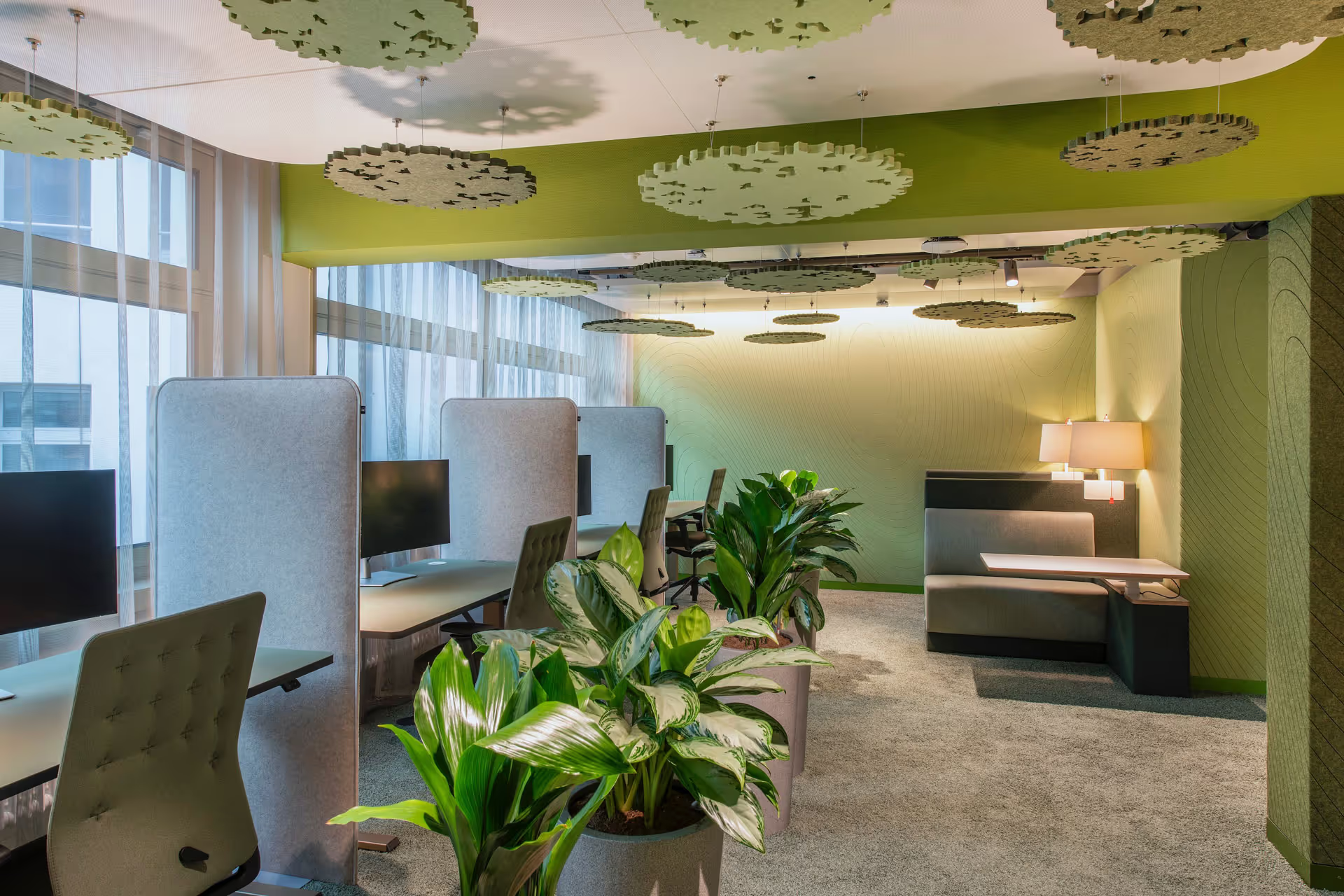
Absolutely. Its upright, architectural leaves and deep green colour allow it to complement modern office aesthetics. It is often used to create visual balance or add a natural accent to collaborative areas.
The plant evolved in challenging, shaded forest environments where it adapted to variable light and cool, humid conditions. Its thick leaves and robust root system contribute to its reputation as one of the most resilient indoor plants.