Learn more

Learn more
Learn more
How Plants and Sensors Help You Understand Winter Office Air


How can plants and sensors help you understand your office air in winter?
Understanding your office air in winter starts with measuring it. When windows stay closed and heating runs all day, CO₂ levels can rise and relative humidity can drop, often without anyone noticing until the room feels stuffy. At Oxygen at Work, we use our own sensors to track a wide range of indoor climate parameters, especially temperature, humidity and CO₂, making these invisible conditions visible. Combined with thoughtfully designed greenery, this data helps companies spot patterns, make informed decisions and create a more comfortable workplace.
Why does office air feel stuffy in winter?
As temperatures drop, we spend more time indoors, windows stay closed for longer, and heating systems keep our offices warm. While this makes the workplace more comfortable, it can also make the air feel stuffy. In rooms with limited ventilation, CO₂ and other indoor air pollutants can accumulate, while heating can contribute to lower relative humidity.
“We spend around 90 percent of our time indoors. We’re sometimes called Generation Indoor. So the air indoors shapes our day more than we think.”
— Raffael Styger, UI / UX Representative, Oxygen at Work
But how do you know what is actually happening to the air in your office? And how can you improve your workspace if you cannot see the problem?
At Oxygen at Work, we believe that a healthier office starts with understanding its environment. That is why we combine carefully planned greenery with smart sensor technology, helping businesses create workplaces that are not only greener but also more comfortable and better understood.
How do we combine plants and technology?
Our plants bring nature into the workplace by adding colour, softening office interiors and helping to create a more welcoming atmosphere. At Oxygen at Work, we combine our greenery expertise with our own software and sensor technology to take this concept a step further.
Rather than simply placing plants in an office and assuming they make a difference, we monitor key indoor climate parameters to understand what is happening in the space. This data helps us identify patterns, evaluate the indoor environment and make more informed decisions when developing a greenery concept.
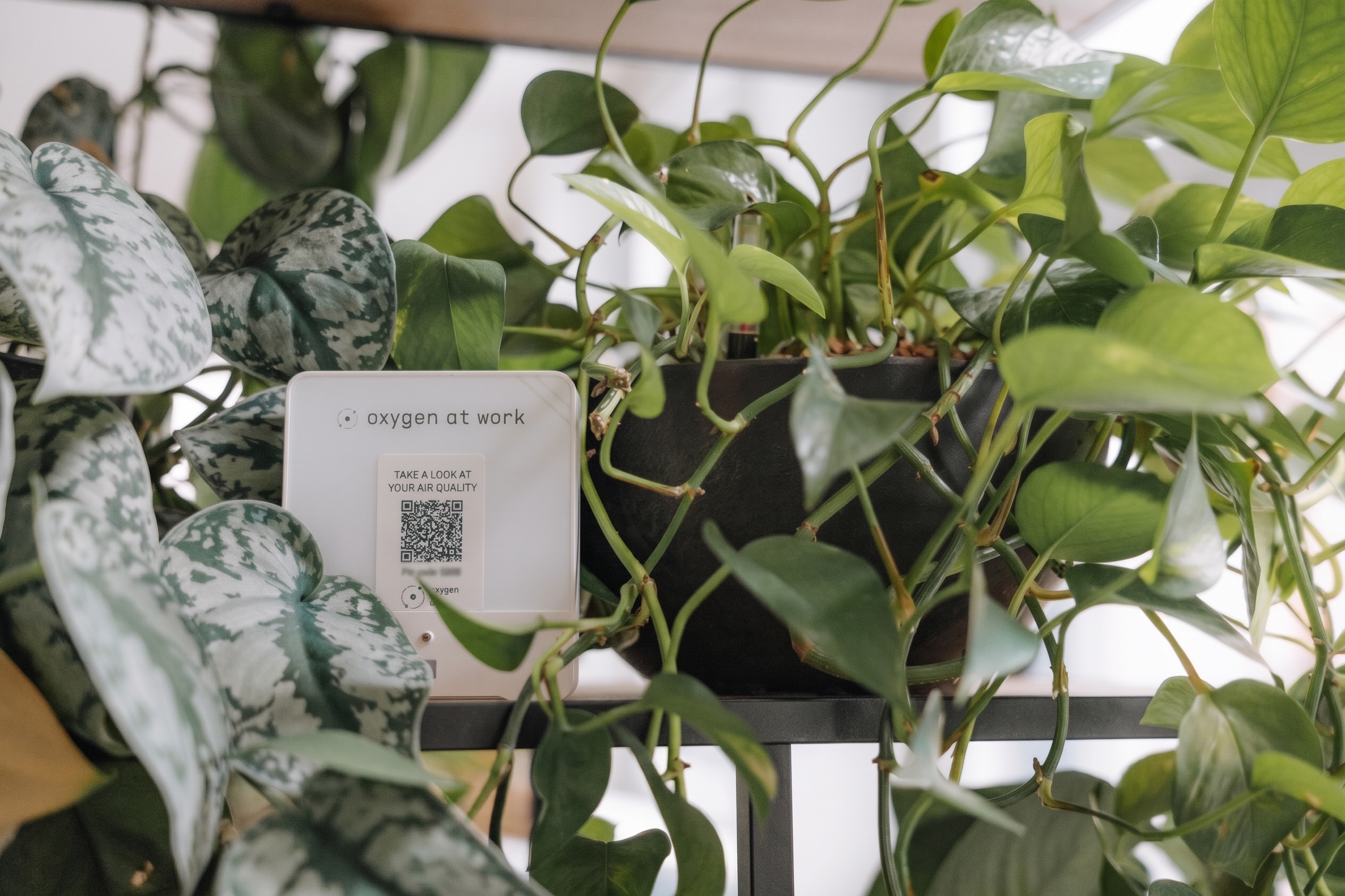
Our sensors are an integral part of our approach. They are compact and easy to install. Once they are installed, they continuously collect data about the indoor environment.
Why measure the indoor air quality?
Indoor air quality is largely invisible. You might notice that a meeting room feels stuffy or that the office is unusually warm, but it is difficult to determine the underlying cause without measurements.
Sensors make these invisible conditions easier to understand. They help us identify fluctuations throughout the day, compare different areas of an office and spot when something needs attention, such as rising CO₂ levels.
For example, CO₂ levels can rise in overcrowded rooms with insufficient ventilation. Temperature and humidity can change with heating and seasonal conditions. Measuring these parameters gives companies a clearer picture of their indoor climate instead of relying on impressions alone.
Of course plants are not the substitute for proper ventilation or effective building systems. That’s why we combine greenery with real data to support a more informed approach to workplace wellbeing.
What do our sensors measure?
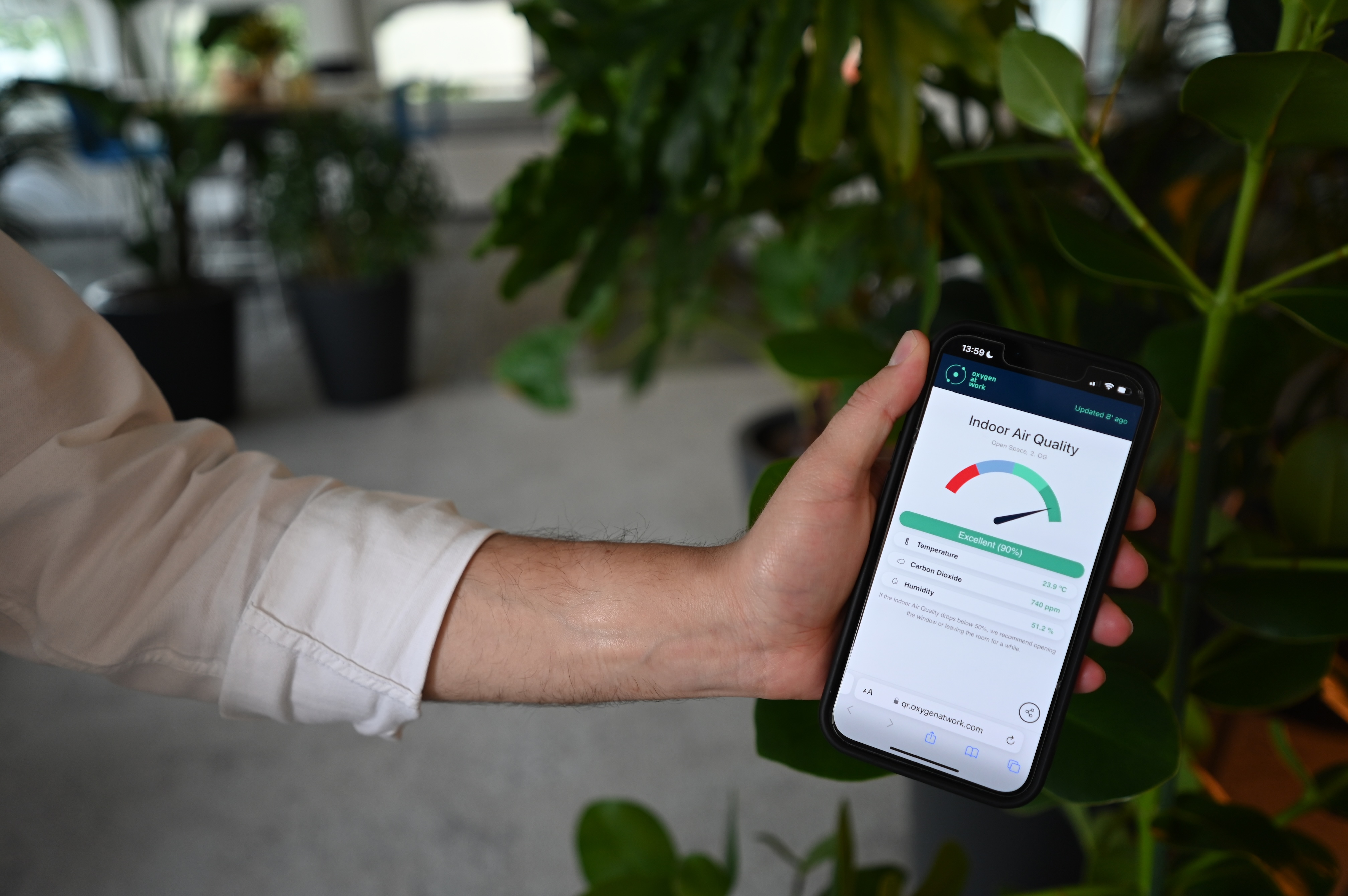
Depending on the sensor configuration, our technology can track several important indoor climate parameters. Three particularly relevant factors are temperature, humidity and CO₂.
1. Temperature: Finding the right balance
Temperature plays an important role in how comfortable people feel at work. In winter, heating systems can create warm indoor environments even when it is cold outside. However, a room that is too warm can feel uncomfortable, particularly when combined with dry air or limited ventilation.
Monitoring temperature helps companies understand how conditions vary between rooms and throughout the day, providing useful information when assessing thermal comfort.
2. Humidity: Understanding dry winter air
When heating is used during the colder months, relative humidity indoors can drop, especially when cold outdoor air comes in and is then warmed. Dry air may also contribute to discomfort, including dry skin, irritated eyes and a dry throat.
Plants naturally release water vapour through transpiration and can contribute to indoor humidity. By monitoring humidity levels, we can observe how the indoor environment changes over time and better understand the role greenery may play in supporting a comfortable atmosphere.
3. CO₂: A useful indicator of ventilation
Carbon dioxide (CO₂) is one of the most useful parameters to monitor in occupied offices. People release CO₂ when they breathe, so concentrations can increase when many people share a room without sufficient fresh-air exchange.
Elevated CO₂ levels can indicate that ventilation needs attention and may coincide with a stuffy feeling or reduced alertness. Tracking CO₂ helps companies identify patterns, such as recurring peaks in meeting rooms or busy office areas, and make more informed ventilation decisions.
Some sensors can also measure additional parameters, such as volatile organic compounds (VOCs), light and fine particulate matter. The exact data available depends on the sensors installed.
Where can you see the collected data?
Collecting data is only the first step in our process. To make it useful, the information needs to be accessible and easy to understand.
Our dashboard brings indoor climate measurements together in one place, allowing authorised users to explore detailed data and follow changes over time. This provides companies with a more comprehensive view of their office environment and supports a data-informed approach to workplace optimisation.
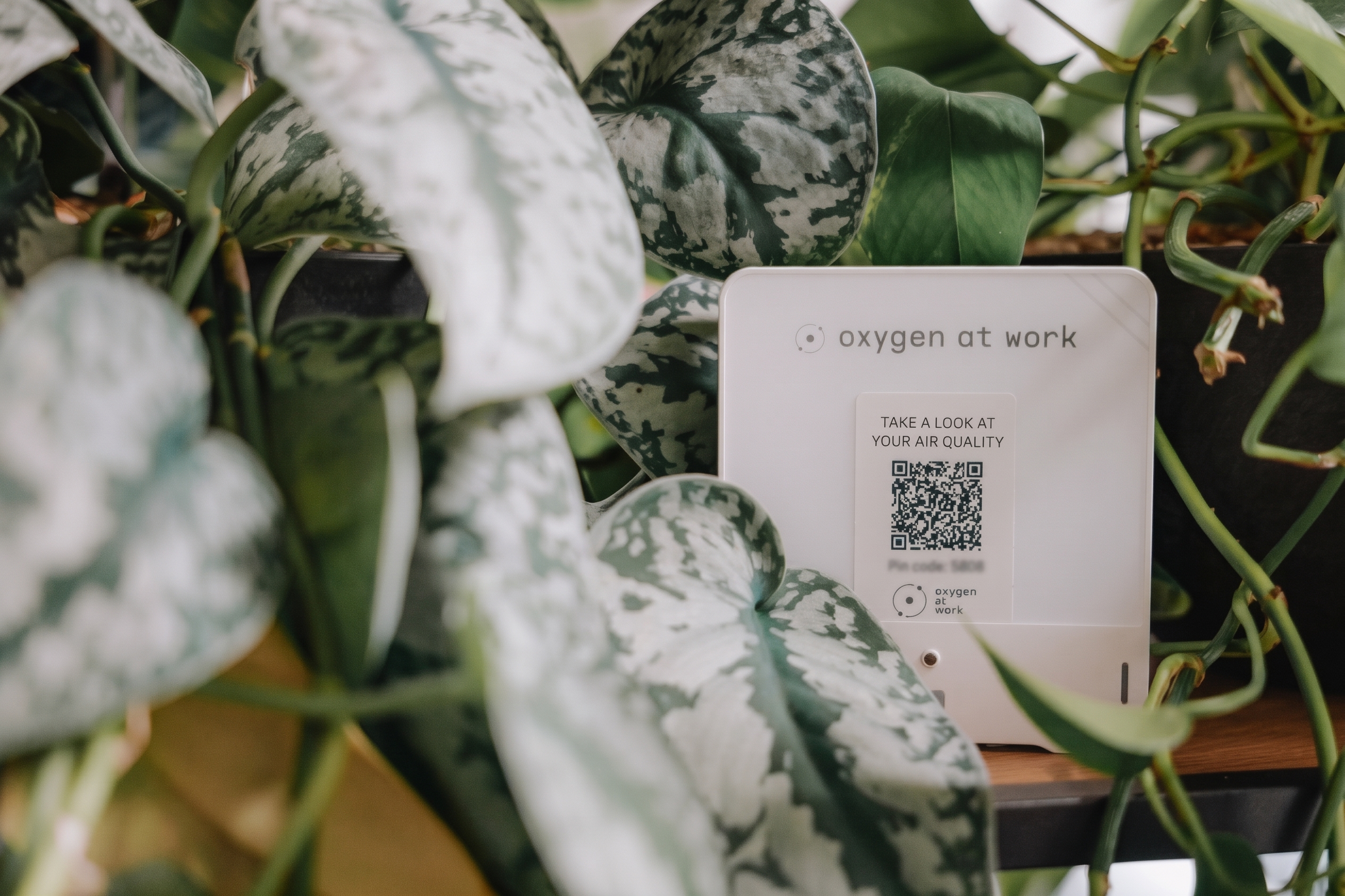
Employees can also access a simplified view of their office's measurements by scanning a QR code on each sensor. They can see the available readings on their phones and see how conditions vary across the office.
Making this information accessible helps employees better understand their indoor environment. It also encourages conversations about air quality, ventilation and the role of greenery, turning an invisible topic into something everyone can explore.
Curious to see what this looks like in practice?
Curious what indoor climate data looks like in practice? Scan the QR code below to explore a live example and see how different parameters change over time.

Greenery for your eyes, data for better decisions
At Oxygen at Work, we combine thoughtfully designed greenery with sensor technology and data insights to help companies better understand their indoor environments.
Especially during winter, when heating and reduced ventilation can affect how an office feels, measuring indoor climate parameters can be a good way to find out what can be improved in every office.



Yes, plants can contribute to indoor humidity. They naturally release water vapour through transpiration, which can support a more comfortable atmosphere when heating dries out the air. With our sensors, we monitor humidity levels over time to better understand the role greenery plays in each office.
No. Plants are not a substitute for proper ventilation or effective building systems. They bring nature into the workplace and can contribute to indoor humidity, but fresh-air exchange remains essential. That is why we combine greenery with sensor data, so companies can see when ventilation needs attention.
Yes. Employees can scan a QR code on each sensor to see a simplified view of the current readings on their phone. Authorised users also have access to our dashboard, which shows detailed data and changes over time across the entire office.