Learn more

Learn more
Learn more
Ficus lyrata
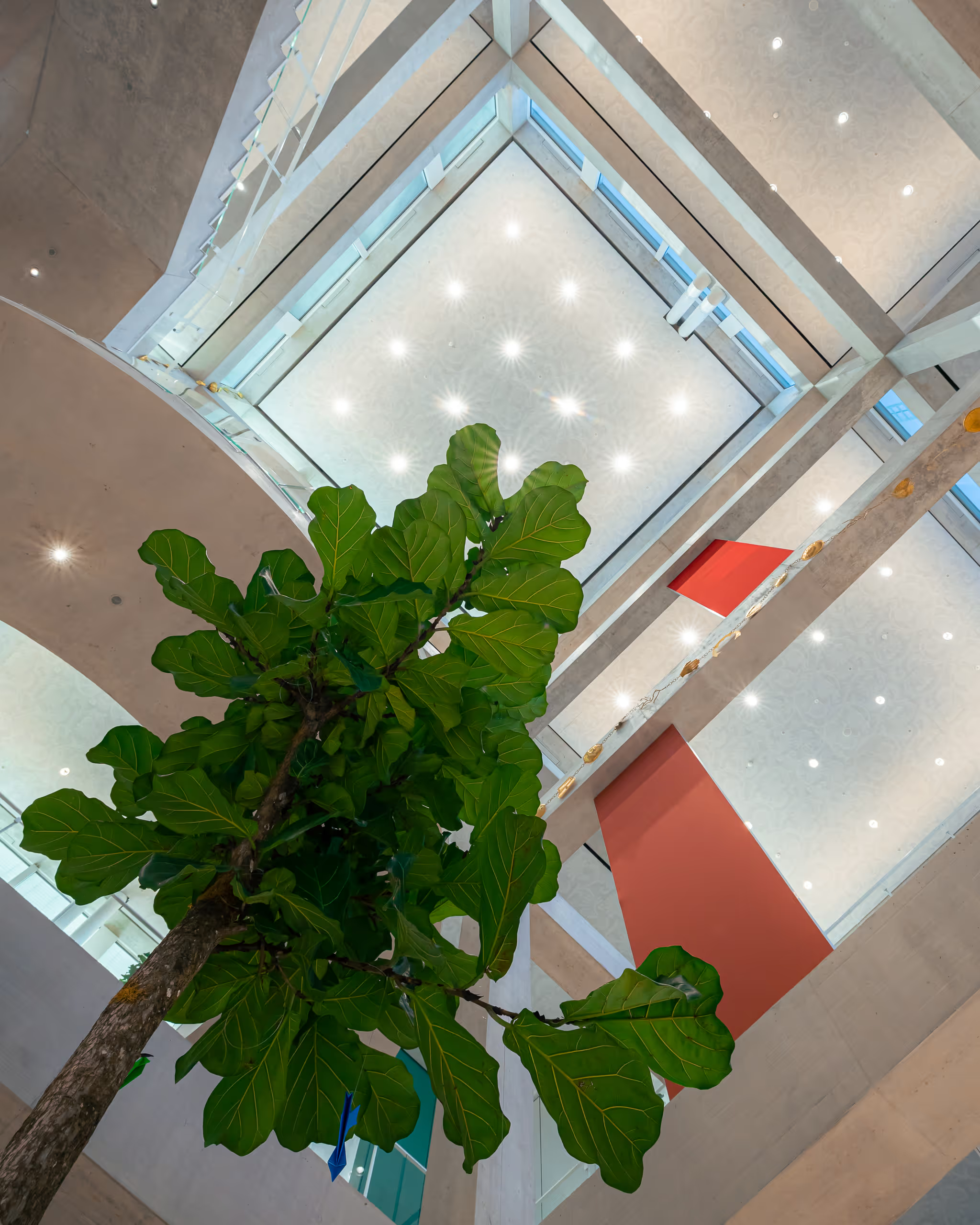

Why a Ficus lyrata makes a great office plant
Few office plants command a room quite like the Ficus lyrata. With its oversized, violin-shaped leaves and glossy surface that catches even the most modest hint of daylight, this plant is a sculptural presence in any workspace. Its generous height of 150 cm or more, and structured silhouette give it an air of quiet sophistication that instantly elevates the spatial atmosphere.

All you need to know about the Ficus lyrata
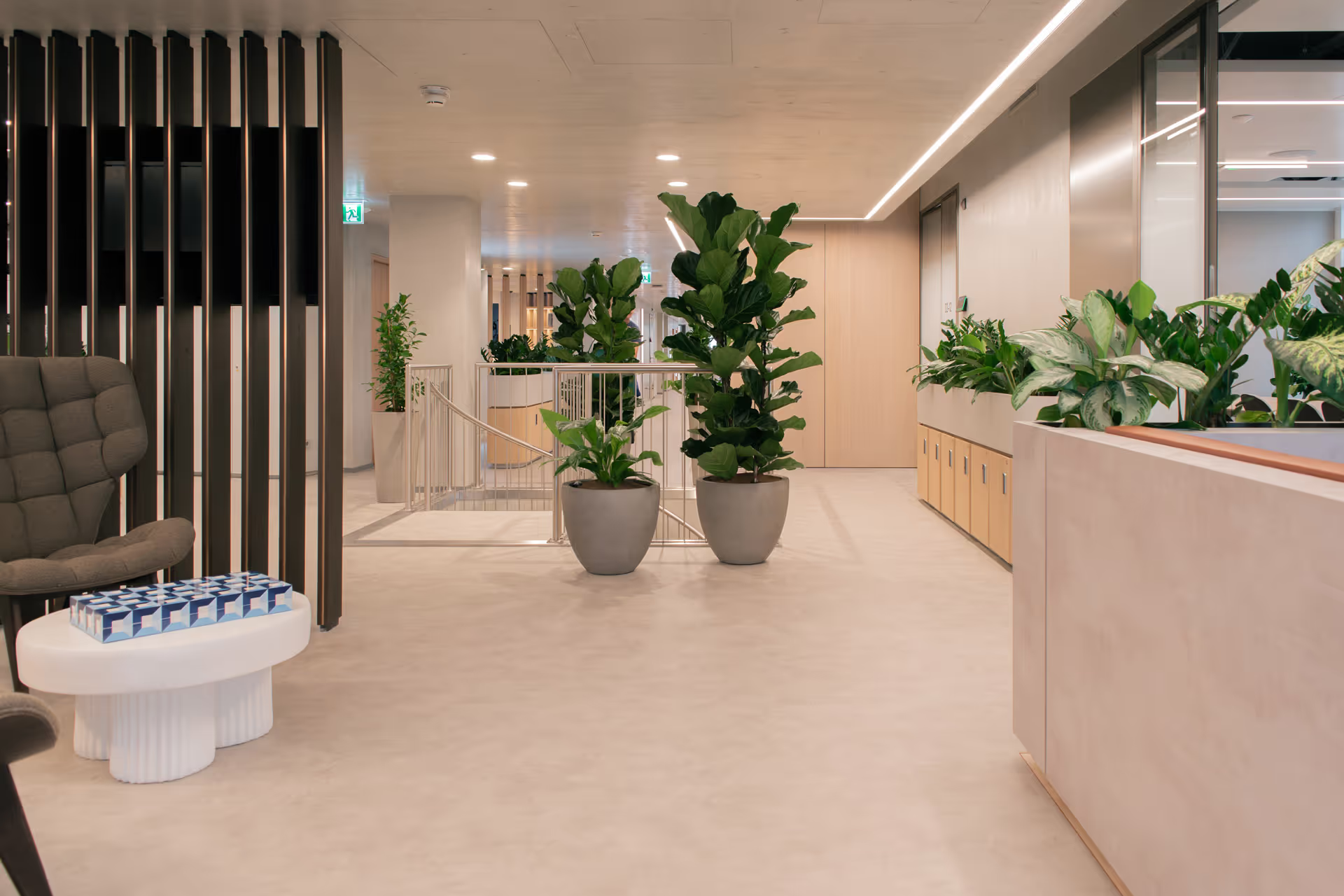
The bold leaves, tinted in a fresh, confident green, lend rhythm to open-plan environments. Their size creates a natural interplay of shadow and light that feels almost architectural. This visual richness is paired with a calm growth habit. The plant grows steadily yet without urgency, making it an unobtrusive companion in meeting rooms, creative studios or reception areas.
In offices with stable temperatures and indirect daylight, the Ficus lyrata performs impressively well. Its origins lie in the warm, humid rainforests of West Africa, from Cameroon to the Ivory Coast, and these roots seem to translate beautifully into the predictability of indoor climates. The plant contains no pollen, which makes it particularly suitable for shared workspaces. With its width of 80 cm, it can also serve as a natural space divider, softening acoustics and creating gentle visual boundaries that feel far more welcoming than partition walls.
Under what conditions does the Ficus lyrata thrive
The Ficus lyrata’s natural habitat is the tropical rainforest canopy where filtered sun, high humidity and an abundance of organic material shape its spectacular leaf growth. Indoors, the plant thrives under comparable light levels where indirect brightness and a consistently warm environment support its structural integrity.
Watering
The plant should be watered in a way that keeps the soil evenly moist while ensuring that the roots do not remain in standing water. It should be ensured that the substrate drains well enough to protect the plant from the risk of root rot. Regular monitoring helps maintain the balance between hydration and structure.
Fertilizing
During its natural growth phases, the plant should be fed with nutrients that support leaf development and vitality. It should be ensured that fertilisation occurs at intervals aligned with the seasonal growth rhythm to maintain both colour and resilience.
Cutting
The Ficus lyrata should be pruned only when required for shaping or to maintain its characteristic upright form. Any cutting should be done carefully to preserve the architectural quality of the plant’s silhouette.
Other Care
It should be ensured that dust does not accumulate on the leaves, as their large surface benefits from consistent cleanliness. The plant should remain in an indoor climate that aligns with its rainforest heritage, including controlled humidity and stable temperatures.
How much water is evaporated by the Ficus lyrata?
“Using research, real-life tests, and office air quality data, we approximate the effect of different plant species. Of course, the actual effect can vary depending on things like room conditions and the plant’s overall health.” George, Data Project Manager
The Ficus lyrata is not only a visual anchor in the office but also an active contributor to indoor air dynamics. With its leaf surface of 0.372 m², it participates in natural water vapor release that enriches the microclimate of workplace interiors. A mature specimen of 150 cm height evaporates around 1.9 liters of water per month, shaping a subtle yet measurable effect on humidity levels.
This makes it slightly lower in evaporation compared to a Howea forsteriana of 1.90 m height, which reaches around 2.1 liters monthly, yet the Ficus lyrata compensates through the dense texture of its leaves. These broad leaf blades create a slow, steady release pattern that integrates seamlessly into the office environment.
An average Ficus lyrata in numbers
Height: 150 cm
Width: 80 cm
Leaf Surface: 0.4 m²
Monthly Water Evaporation: 1.9 l
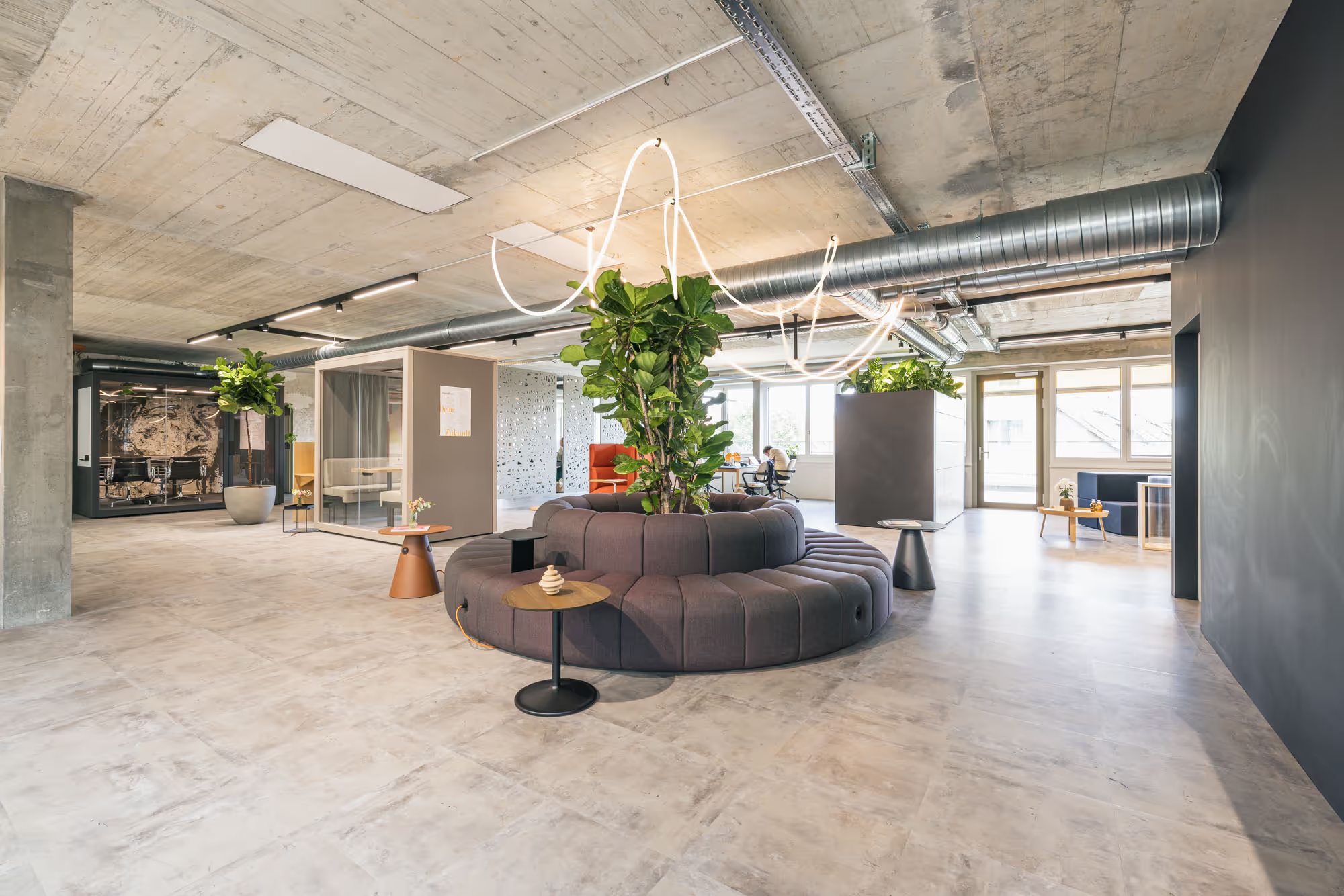
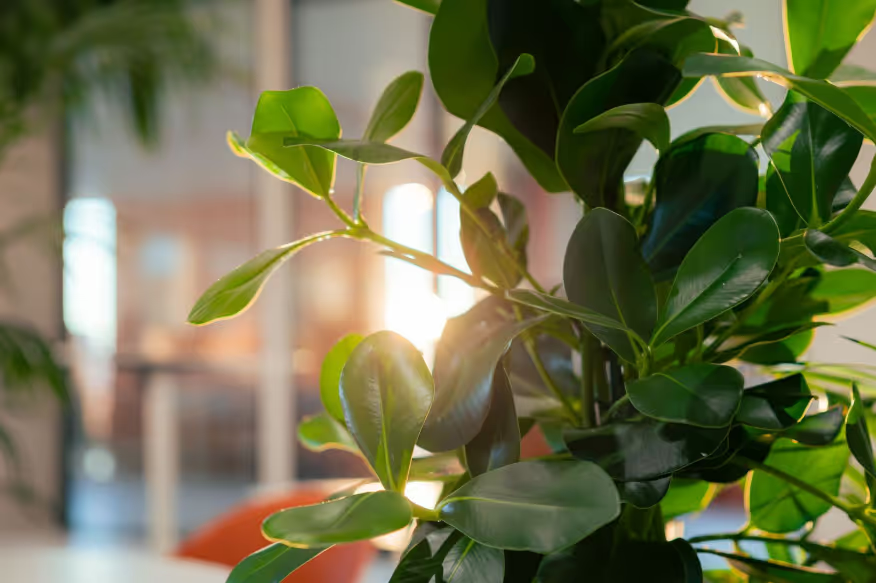
The plant prefers bright, indirect light but performs reliably in spaces with consistent ambient illumination. Its adaptability makes it a strong choice for many modern workplaces.
The species contributes to indoor humidity through water vapor release and supports natural air-refreshing processes. Its large leaf surface plays an important role in these interactions.
Growth is moderate and depends on environmental stability. In suitable indoor conditions, it develops steadily and maintains its elegant form without becoming invasive.
The plant does not flower indoors, which makes it especially clean and predictable in office settings. Its visual appeal relies entirely on its sculptural foliage.
The plant produces no pollen and has a calm growth habit, making it highly compatible with shared spaces. It performs best when professional horticultural care is provided.