Learn more

Learn more
Learn more
Why Is Biophilic Design The Future For Office Spaces?
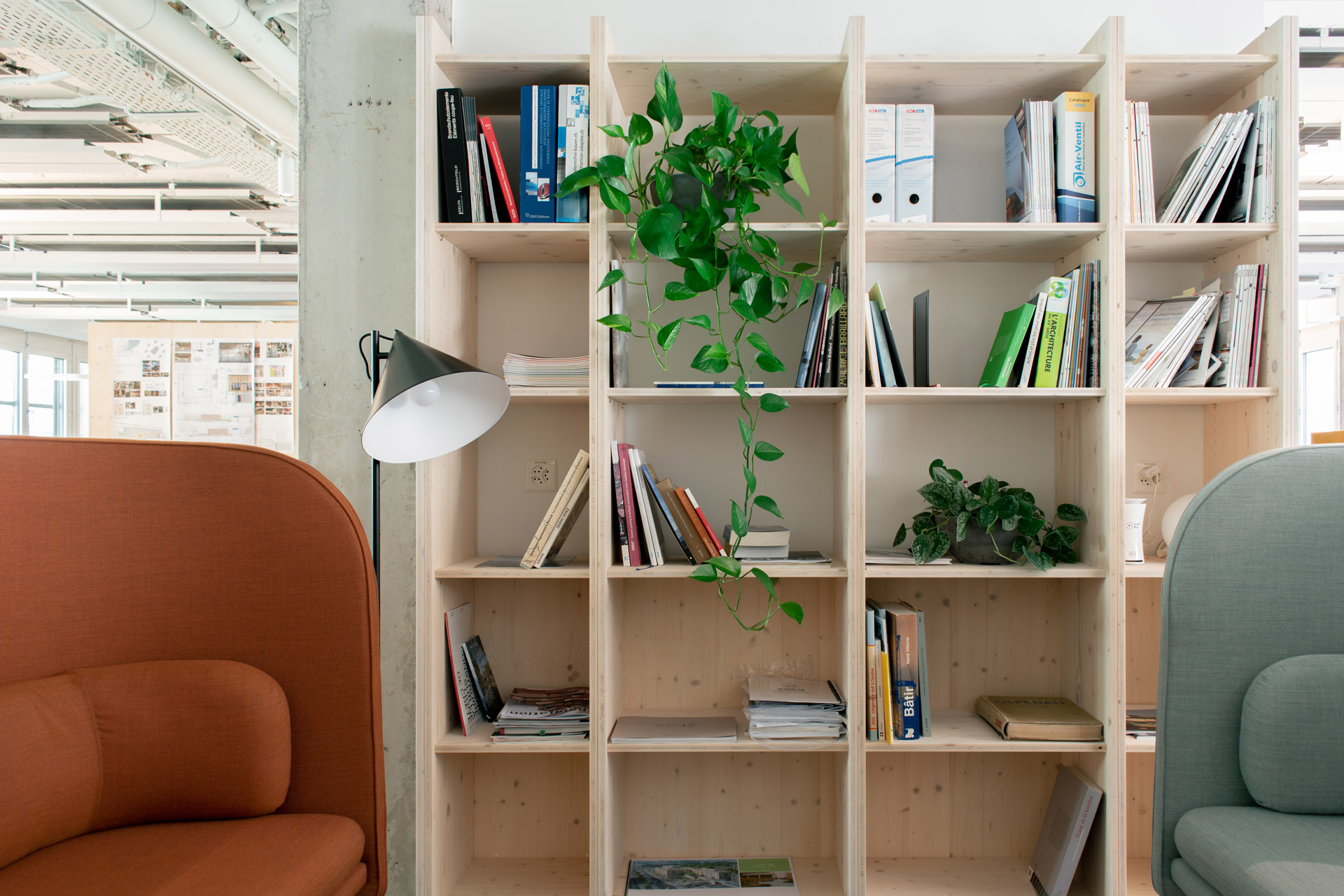
Why nature keeps finding its way back into our offices
Human beings spent most of their history outdoors, reading the land for water, shelter and fertile ground. That instinct never left. It simply moved indoors, and it still shapes how people feel in a meeting room, a corridor or an open-plan floor.
Biophilic design is the discipline that responds to this instinct. It brings the patterns and materials of the natural world into a building, and in an office that means far more than a shelf of plants. This article looks at what biophilic design actually gives a workplace, and which measures are worth adopting first.
What biophilic design gives an office, and how to bring it into yours
Happier teams, better retention
A 2019 workplace study found that employees satisfied with their surroundings were 16% more productive, 18% more likely to stay with their employer, and 30% more likely to be drawn to a company over its competitors. Office life has changed since then, with hybrid work reshaping when people come in at all, but the office's role in wellbeing and engagement has not gone away. A well planned greening concept still gives people a reason to want to be in the room.
According to a Today magazine survey, 97% of respondents saw their workplace as a direct signal of how much their employer valued them.
Air people can feel the difference in
Well placed plants do more than decorate a room. They act as natural air filters, and in meeting rooms, corridors and shared spaces they create small pockets of calm where the air genuinely feels easier to breathe.
Sustainability without the overclaim
Plants alone will not make an office sustainable. What they can do is reduce the load on heating and cooling, take some of the summer heat out of a room, and cut spending on conventional decor. It is a modest contribution, not a headline claim, and biophilic design is honest about that.
What actually works: three practical measures
Green islands
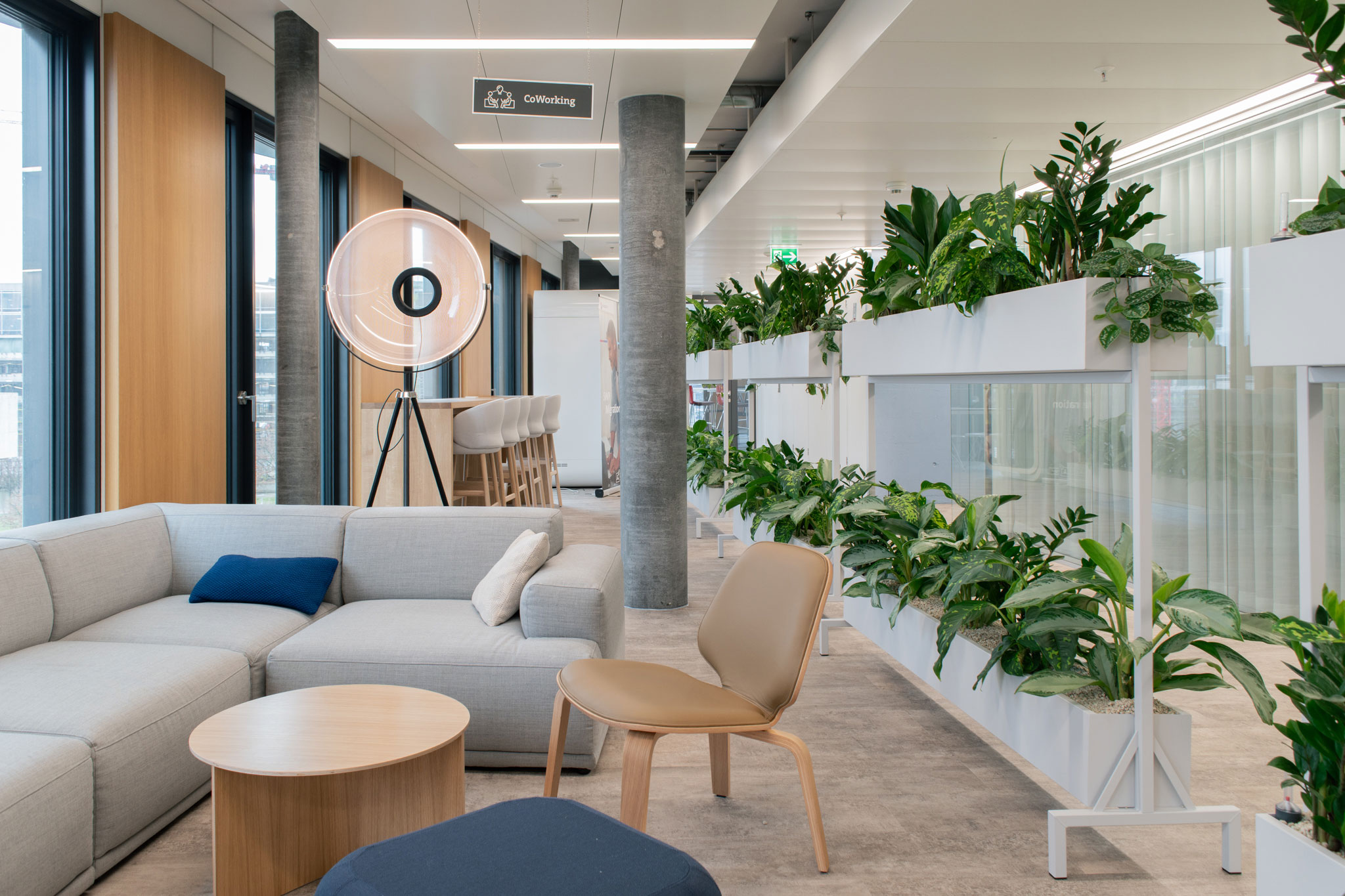
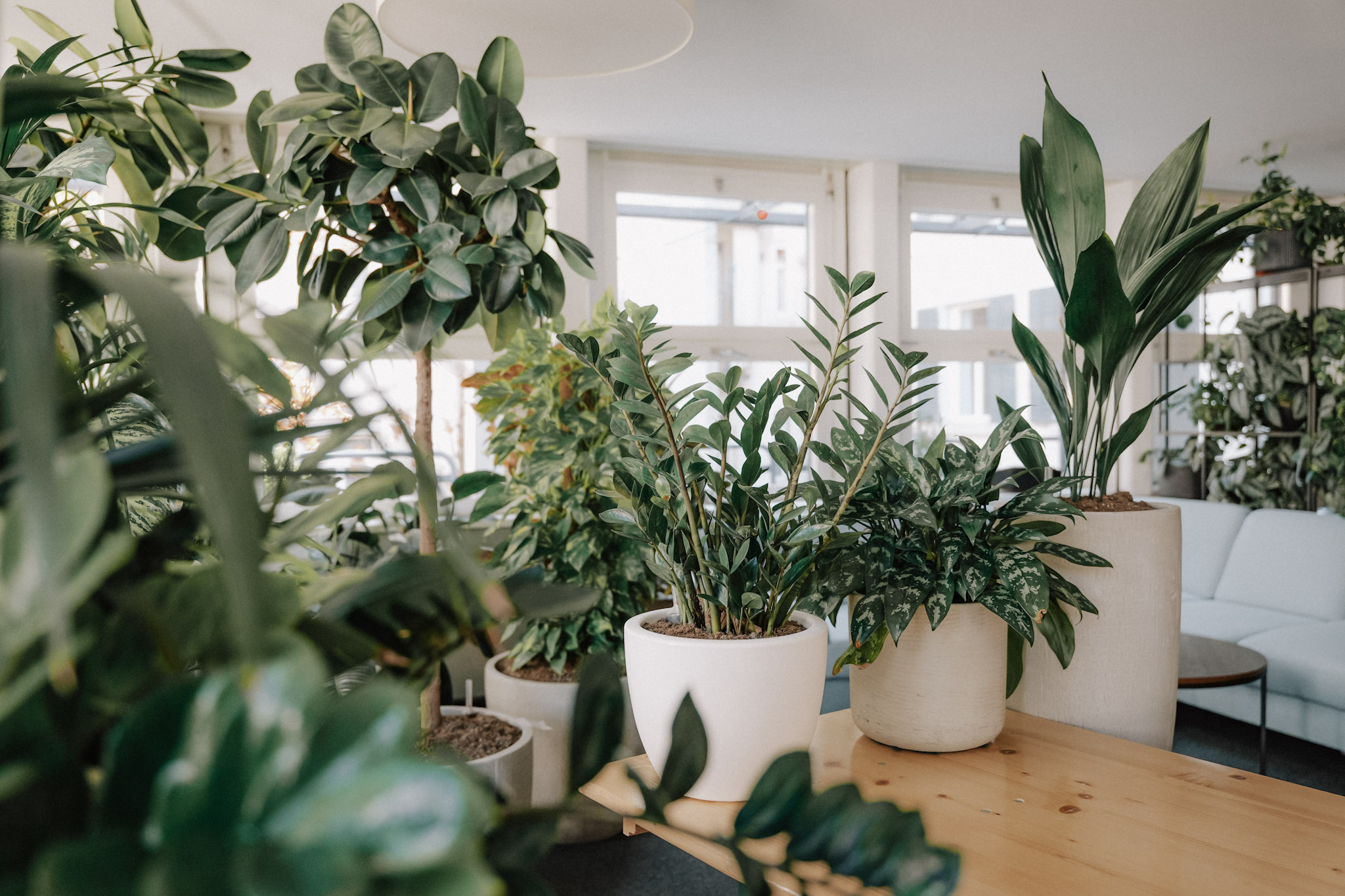
Grouping plants together, tall ones next to short ones, creates a green island rather than scattered pots around a floor. The effect reads closer to a pocket of garden than an office corner, and it gives people a reason to linger.
"The Oxygen Gardens give us a different kind of workspace entirely: a set of retreat spaces that encourage creativity, with air quality our own measurements confirm is excellent. Even though the desks themselves are standard, the looser layout makes the space feel completely different from our team zones."(Nicholas Gysi, Swissgrid)
Green walls
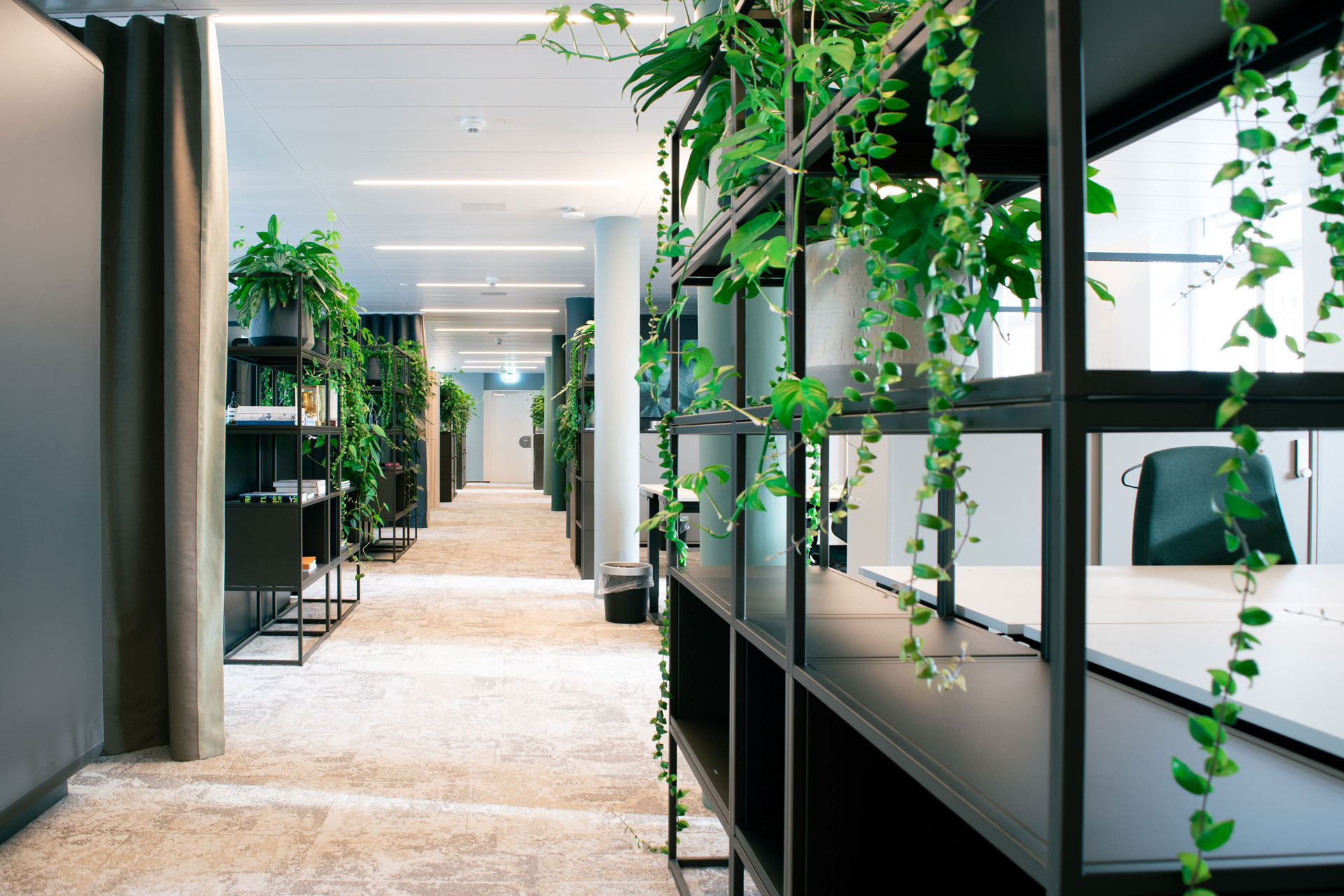
A green wall is a vertical structure planted densely enough to read as a single, unbroken surface of greenery, the closest an office gets to a wall of jungle.
Plant curtains
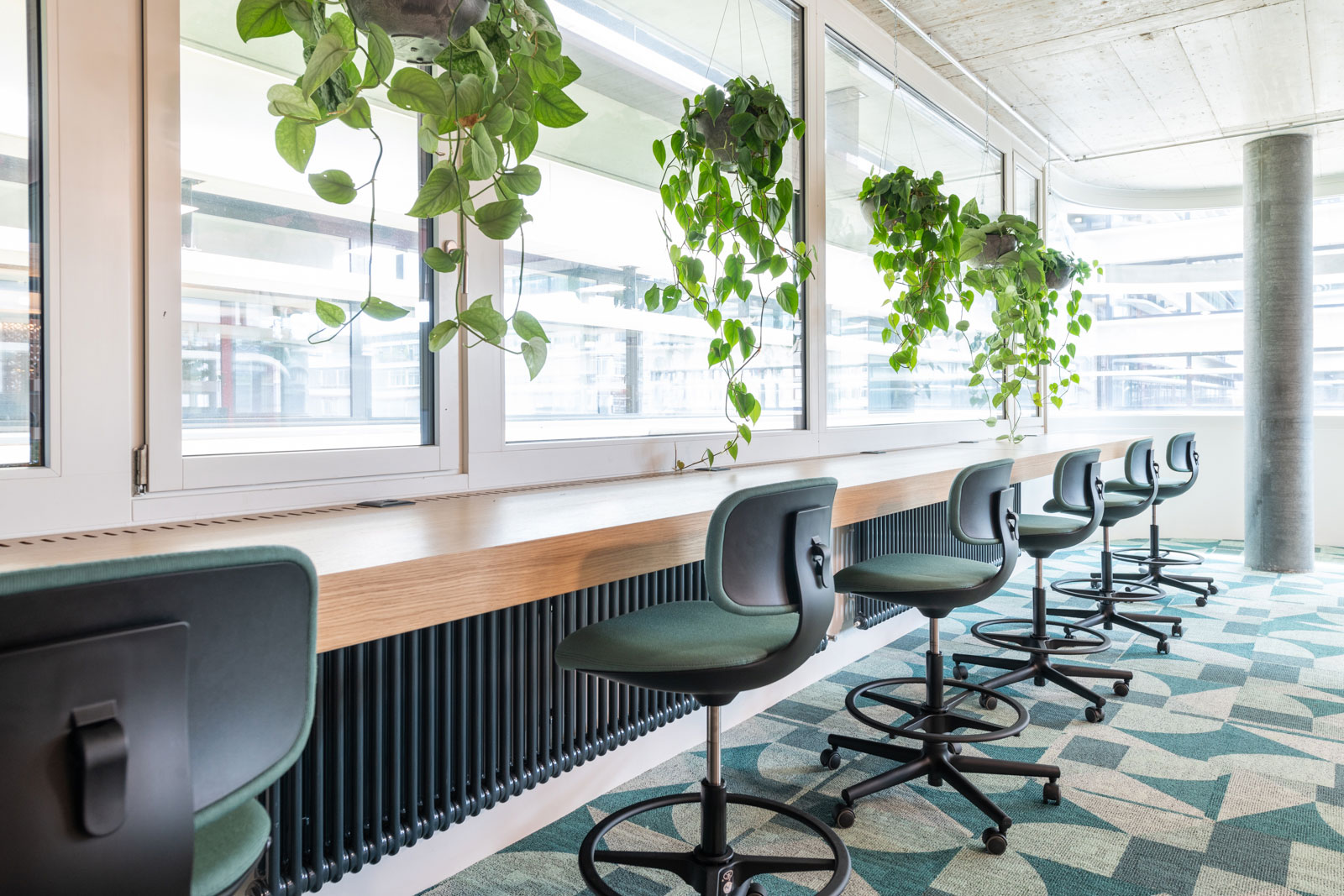
Hanging plants with long trailing vines filter natural light and soften large windows, doing the work a conventional curtain would, with foliage instead of fabric. Aeschynanthus lobbianus, commonly known as the lipstick plant, is a favourite for this: its bright red flowers are always a small surprise to the people working nearby.
Beyond the plants
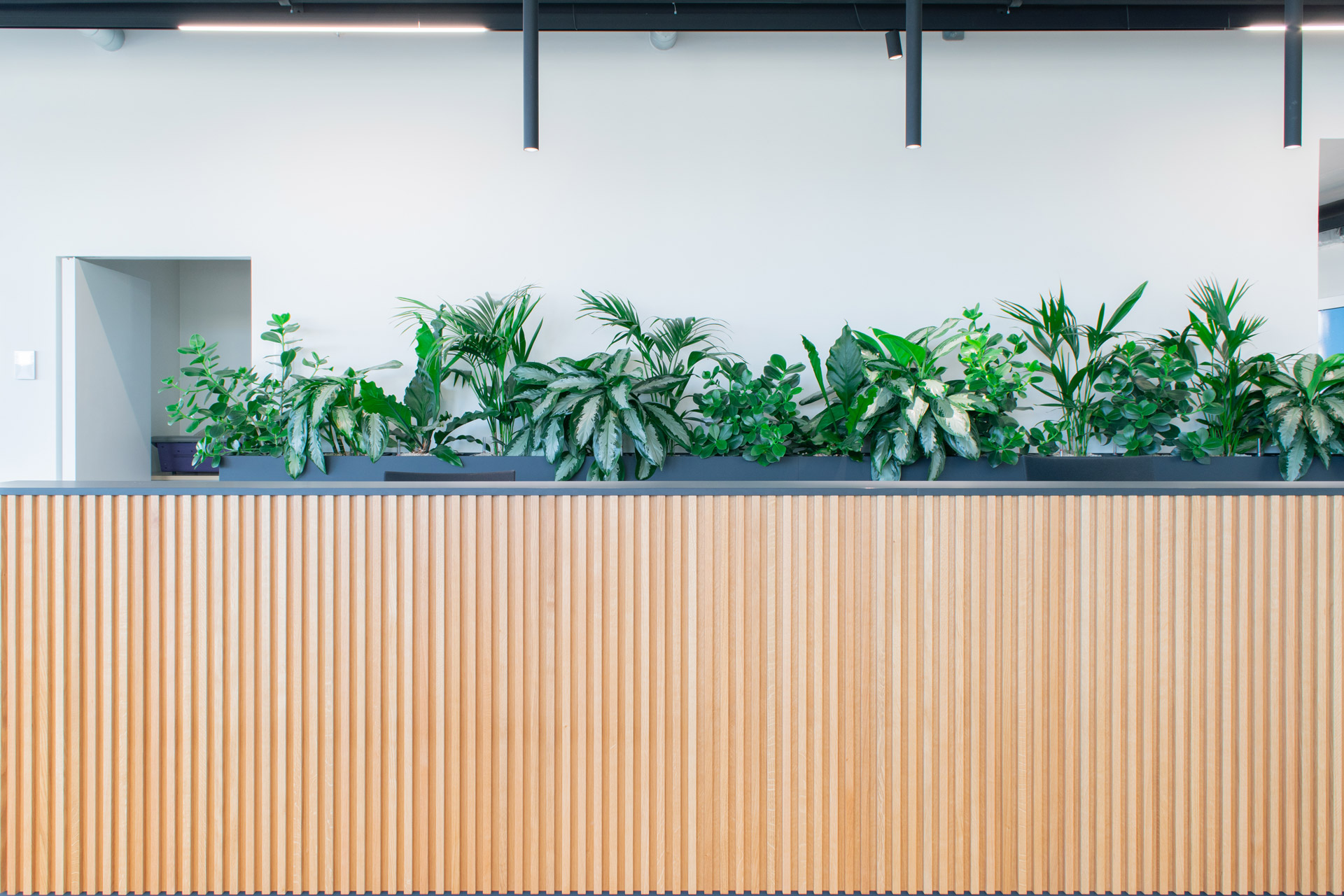
True biophilic design does not stop at greenery. Untreated wood brings its own sustainability and sensory benefits, releasing fewer chemicals into a room and giving furniture a natural texture that plants alone cannot provide. Plants and materials work best as one concept, not two separate decisions.
.jpg)
It is the practice of shaping a space, including materials, light and layout, so that it reconnects people with the natural world. In an office, plants are the most visible part of it, but not the only one.
Not on its own. A handful of pots helps, but biophilic design considers the whole space: how plants are grouped, how light moves through a room, and what materials sit alongside the greenery.
The available research points that way. One widely cited 2019 survey found that employees satisfied with their workspace were 16% more productive and considerably more likely to stay with their employer.
Strategically placed plants act as natural air filters and can measurably improve air freshness in meeting rooms, corridors and shared spaces, especially when paired with ongoing monitoring.
Not automatically, but it helps. Plants can reduce heating and cooling loads and cut spending on conventional decor, which adds up to a modest but genuine sustainability gain.
It helps. Getting plant choice, placement and materials right across an entire floor is more complex than it looks, which is why most companies bring in a dedicated greening partner rather than handling it space by space.