Learn more

Learn more
Learn more
Which Office Plants Work Best in Each Room? A Guide to Office Greening
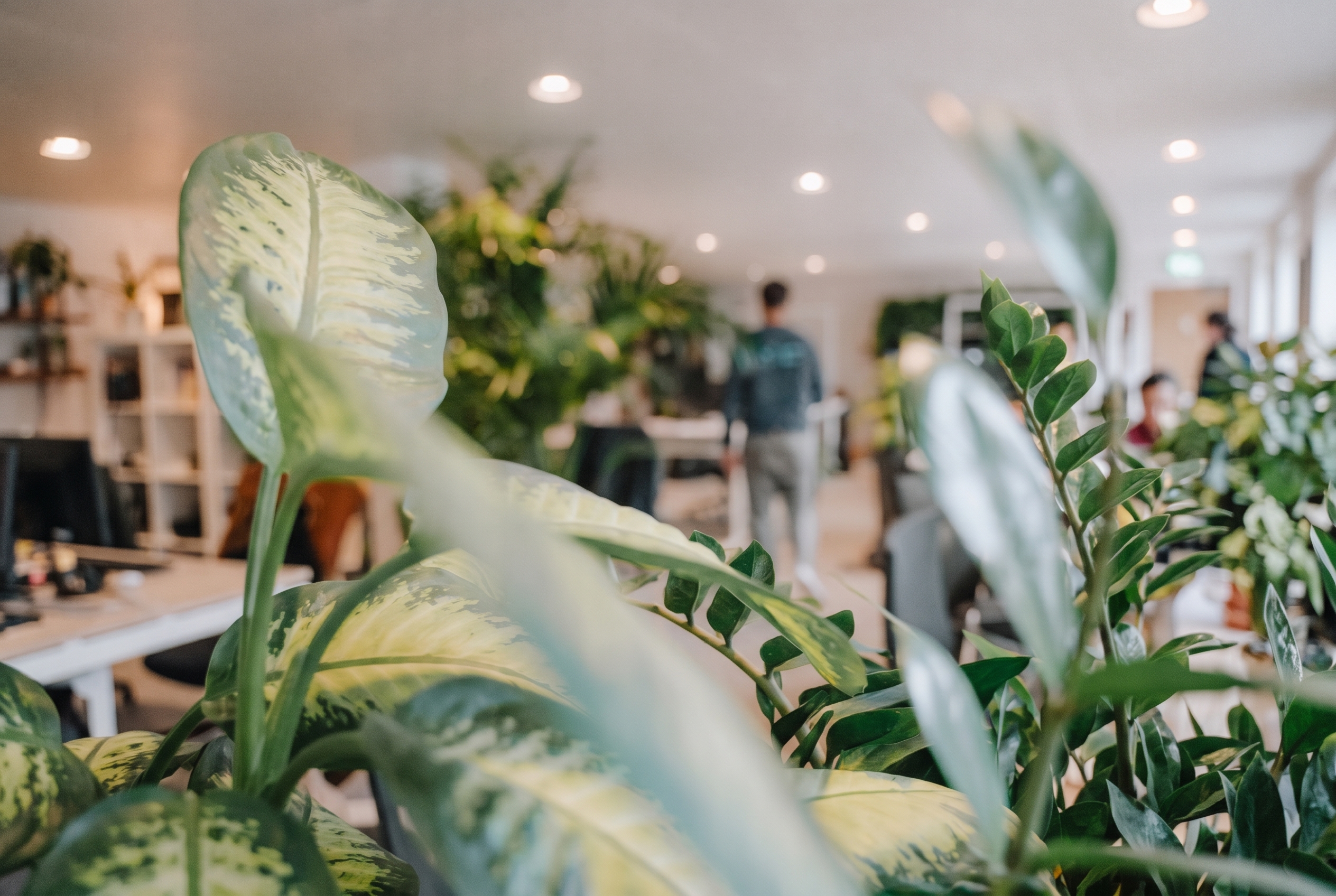

Which greening works best in each room of your office?
Every room in an office has a different job. The reception has to make a good first impression, the open-plan area needs to be calm, meeting rooms should inspire new ideas and corridors need every bit of floor space they can get. That’s why there isn’t one perfect office plant, but the right greening element for each room. Based on more than 1,000 projects, we show which of our 12 greening elements fit where and which ones help with common problems like noise, little space or low light.
Why does the right placement of office plants matter?
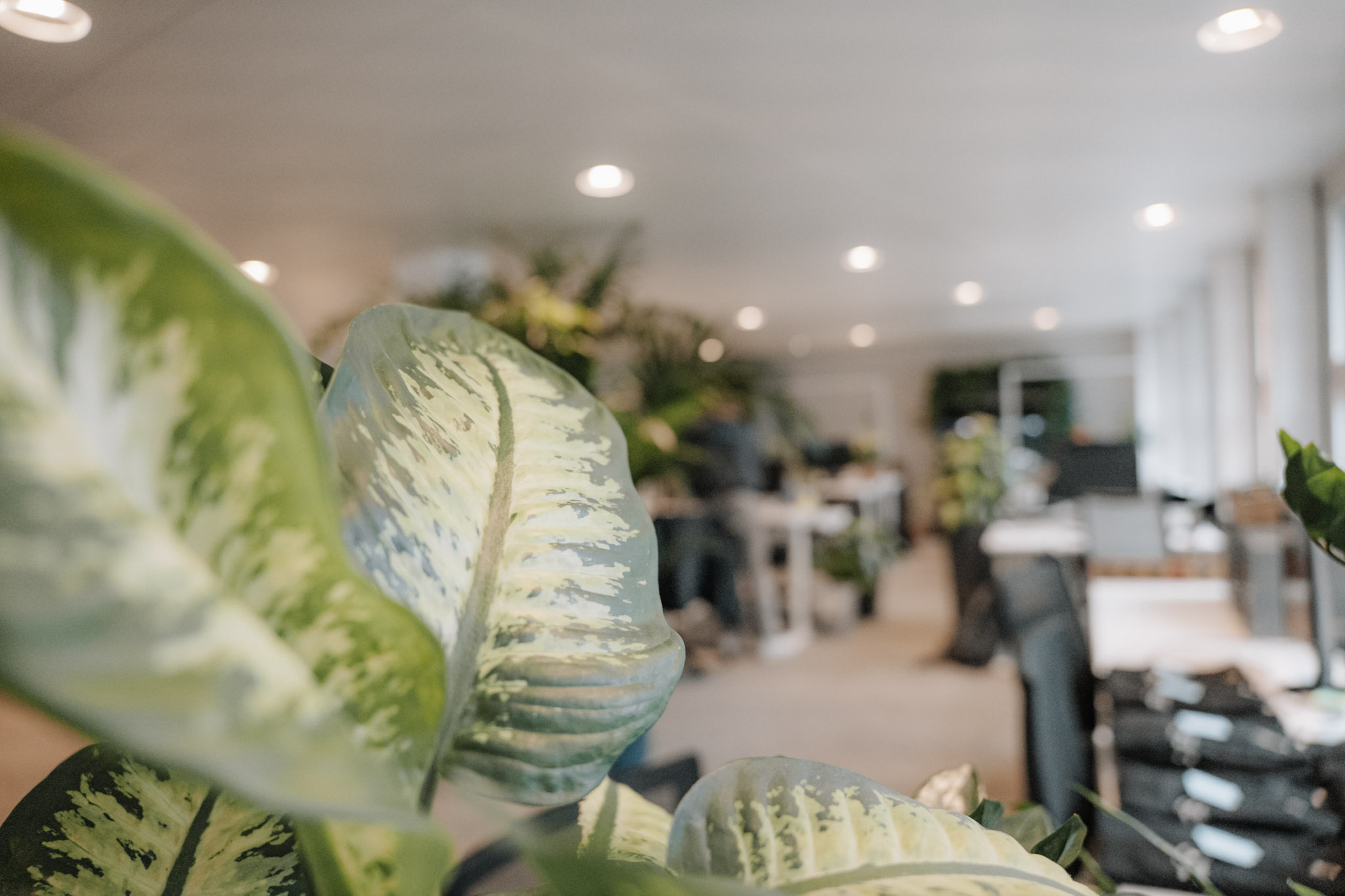
Most offices have plants, but it's often a lone ficus by the window that nobody really looks after. In other offices, the plants are part of how the space works and feels. They greet visitors at the reception, they split open space areas and make the break room a place people actually enjoy spending time in. These offices don't necessarily have more plants, but the plants are placed in the right places.
In this guide, we share what has worked in more than 1,000 of our projects. Room by room, we show which of our 12 greening elements fit where and how they help solve everyday office problems.
Which greening elements make the best first impression in reception?
Visitors, applicants and clients form an opinion about a company within seconds. The Reception is the place where that happens, so it's a good place to be a bit bolder with greenery. That’s why we have several suggestions for bringing life into your reception and entrance:
1. Green Walls cover a lot of surface and are the first thing people notice when they come in. They are ideal behind reception desks for example.
2. Moss Walls are made of preserved moss and never need watering. They also absorb sound and the logo of the company can also be integrated in the wall to brighten up the entrance.
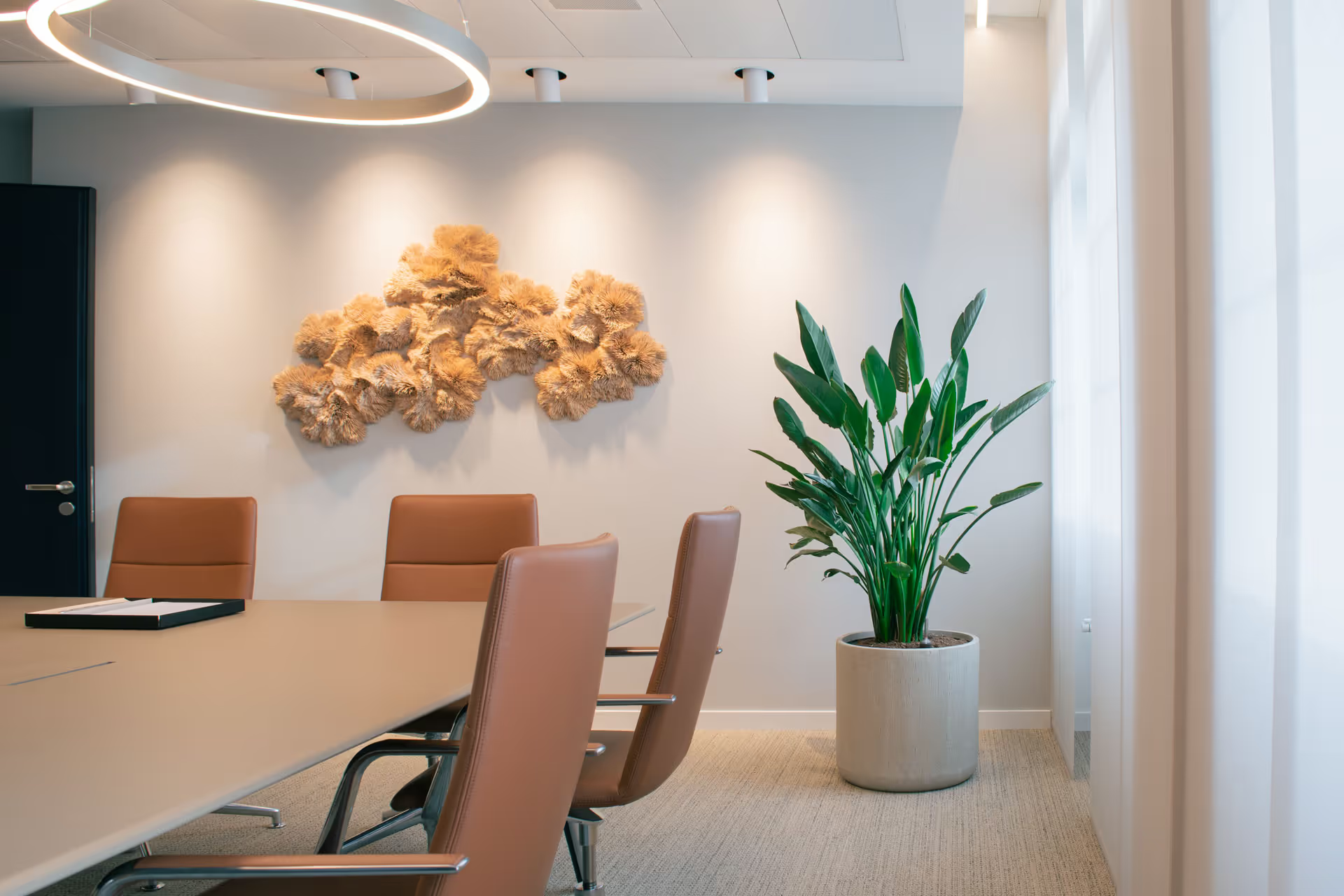
3. Large Potted Plants such as Strelitzia nicolai or Ficus lyrata are big enough to change how a room feels. They are especially effective in high-ceilinged lobbies.
4. Furniture-Integrated Plants are built straight into the furniture, so that the plants become one with the furniture instead of sitting on top of it.
Insider tip: One large plant can have more impact in reception than many small ones. Small pots on the counter could quickly look cluttered.
Which greening elements bring calm to an open-plan office?
Noise and a lack of spaces to retreat are the most common complaints in open-plan offices. Greening can create zones and soften sound without building additional walls. We can offer several solutions for exactly these problems:
1. Green Room Dividers combine furniture and plants in one piece. Used as room dividers, they show where one team ends and the next begins, absorb sound and can be moved if the layout changes later.
2. Oxygen Elements are custom planters designed into your furniture. They run along a sideboard and draw a green line through the floor plan.
3. Hanging & Climbing Plants grow along window fronts, wall grids and phone booths. That adds greenery at eye level without taking up any desk space.
Insider tip: One should place plants where people sit, not only by the windows. Only then does greening have an effect on wellbeing and focus. Read more about the effect of plants on our mental health here.
Which greening elements inspire creativity in meeting rooms?
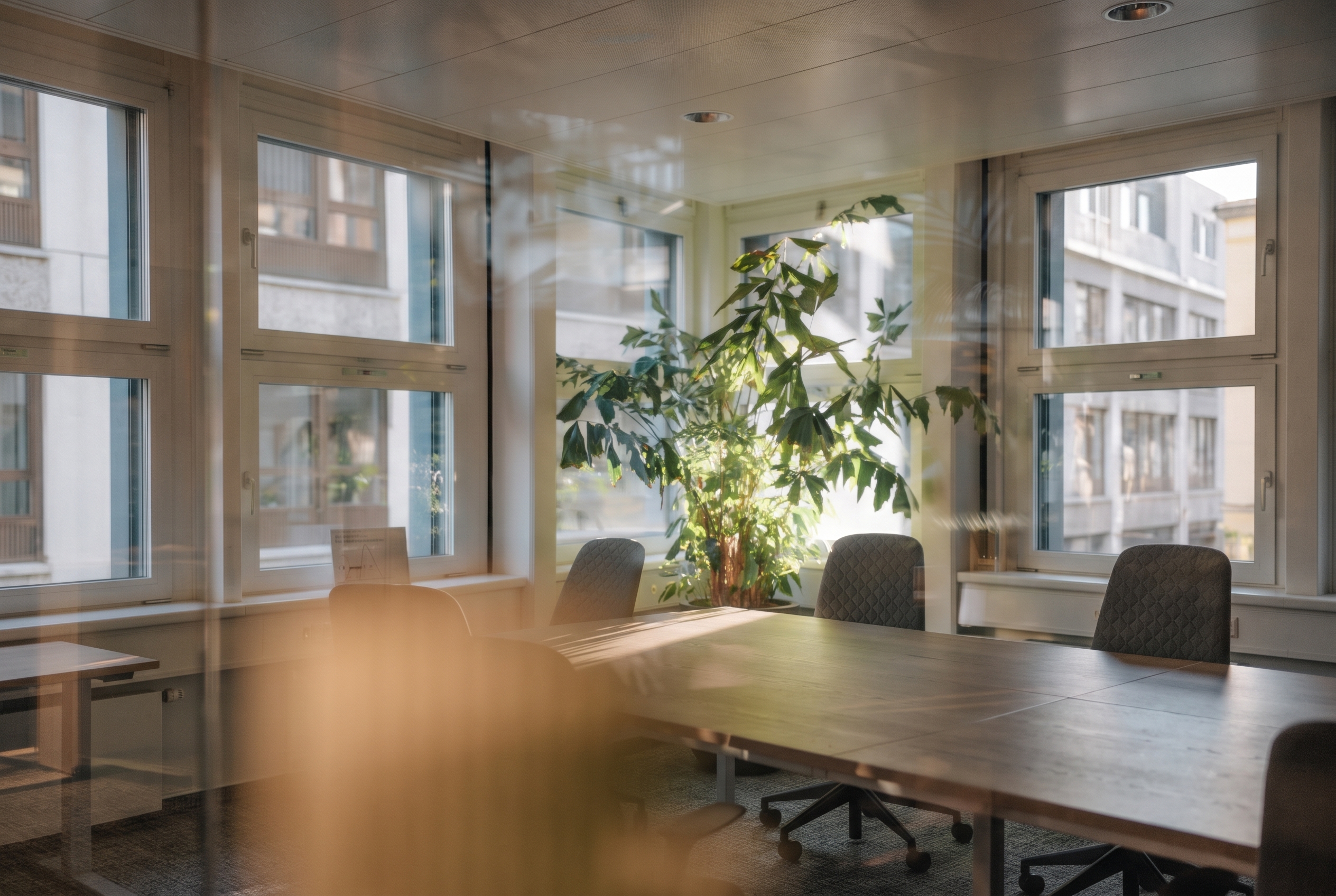
Most people have had their best ideas somewhere outside the office, often on a walk in the forest. Being surrounded by nature helps us switch off and think more freely. Meeting rooms are where teams come together to brainstorm and solve problems, so it makes sense to bring a bit of that nature inside. With the right greenery, workshops feel more relaxed and ideas flow more easily. We can offer several solutions for meeting rooms:
1. Plants in High Pots are placed in the corners are a popular choice. They save space and still look elegant in meeting rooms.
2. Oxygen Elements are custom planters built into your furniture. In meeting rooms, they can run along the wall and bring greenery into the room without taking up any space on the table.
3. Plants in Shelves such as Scindapsus trailing over the edge or Monstera minima between shelves add organic depth.
4. Plants on Sideboards like Aglaonema, Peperomia or Sansevieria use surfaces you already have, without changing the layout.
Which greening elements fit narrow corridors and waiting areas?
Corridors tend to be narrow, dark and purely functional. A bit of green makes them nicer to walk through and makes waiting areas more inviting, while keeping every path clear. Our recommendations are:
1. Plants in High Pots combine plant and pot into one design piece. Because they are tall and slim, they add a strong accent in corridors while taking up very little floor space.
2. Green Ceilings make use of the one surface most offices leave empty. Hanging plants overhead keep the floor completely free, but add to the atmosphere.
3. Moss Walls are only a few centimeters deep and don't need any watering. They work well in passages without windows.
Which greening elements turn break areas into places to recharge?
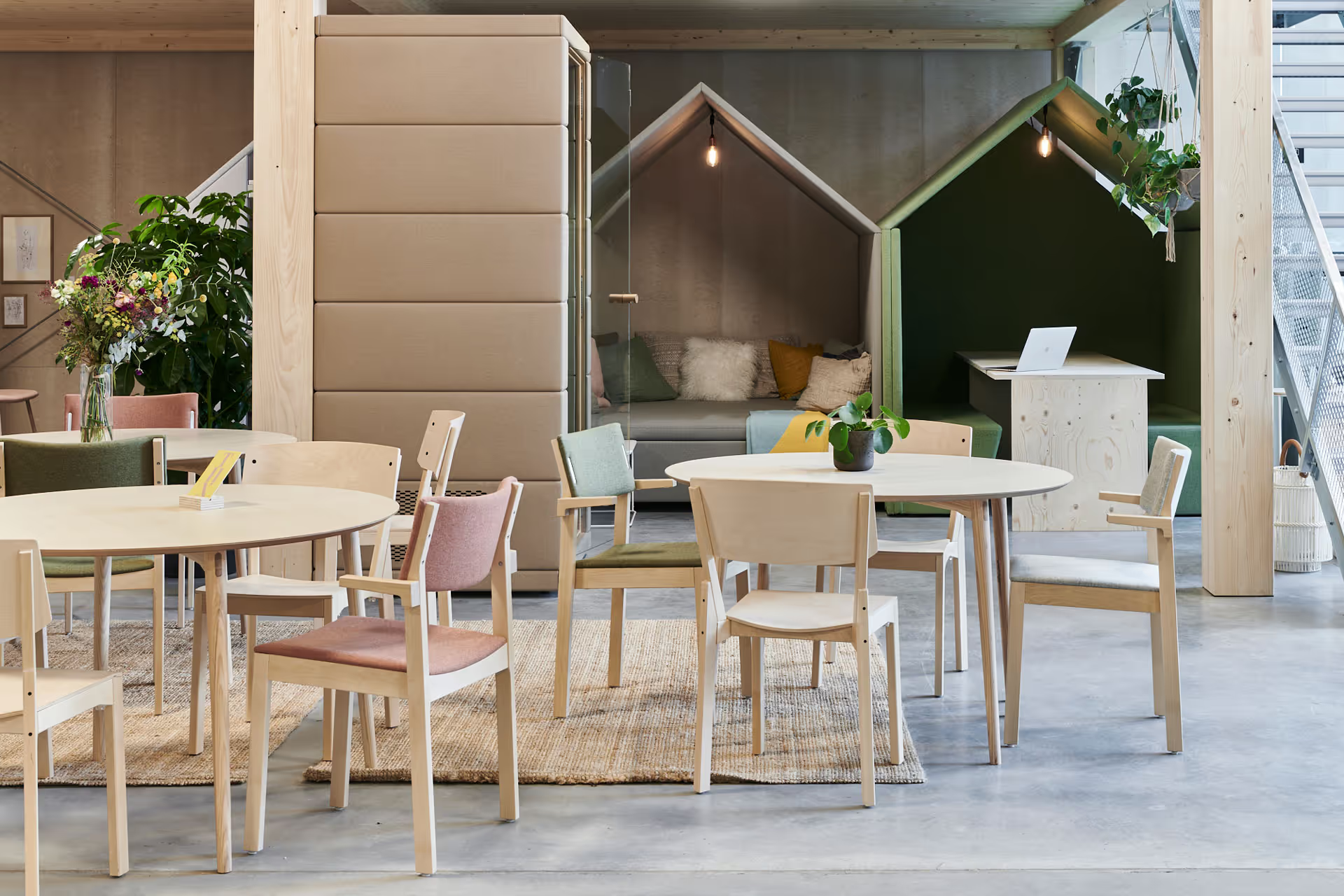
Break areas are where employees come to switch off. Here, greening can be lush, more generous and feel like a garden. For break rooms we also offer a selection of options:
1. Oxygen Gardens are whole green zones made up of several greening elements that are planted closely together. The air quality can improve and the room becomes a place where people genuinely want to spend time in.
2. Green Ceilings turn the ceiling of a bistro or kitchen into a playful green picture. The Hanging plants create a natural roof above the tables while leaving the floor completely free.
3. Plants in Shelves bring kitchen niches and lounges to life without taking up seating space.
Insider tip: The kitchen is often the busiest room in the office. Greening here shapes how people perceive the whole office and can make them feel more calm.
Which greening element solves which office problem?
Not every office is planned room by room. Often, there are a few specific problems that need solving. Below you can find the most common elements we use in short:
Problem 1: Little floor space → Green Walls, Green Ceilings, Hanging & Climbing Plants, Plants in High Pots
Problem 2: Noisy open-plan space → Green Room Dividers, Moss Walls
Problem 3: Low light or no windows → Moss Walls or shade-tolerant plant species
Problem 4: Dry air in winter → Oxygen Gardens, Large Potted Plants
Problem 5: No separation between zones → Green Room Dividers, Oxygen Elements, Plants in Shelves
Problem 6: Empty, impersonal rooms → Green Walls, Large Potted Plants, Oxygen Gardens
Not sure about what works in your office spaces?
Our team assesses the light, the space and how the rooms are used, either on site or online. Then they put together a concept for you, including plant care and air quality monitoring.
Contact us here.

Yes. Leaves and moss break up and absorb sound. Green Room Dividers and Moss Walls between work zones are most effective, but they complement rather than replace acoustic planning.
Oxygen Elements are custom planters built into your furniture, for example along a sideboard. An Oxygen Garden is a whole zone that combines several greening elements at high density.
Green Walls, Moss Walls, Green Ceilings and Hanging & Climbing Plants take up little or no floor space. Plants in High Pots also suit narrow corridors.
Moss Walls are made of preserved moss and need neither light nor watering. For living plants in dim corners, robust species such as Zamioculcas or Aspidistra are a good choice.