Learn more

Learn more
Learn more
Office Air Quality Explained: The 4 Values You Should Know


What makes good air quality in the office?
Good office air comes down to four values: CO₂ below 1,000 ppm, relative humidity between 30 and 60 percent, a temperature of 20 to 24 °C in winter and 23 to 26 °C in summer, and as few pollutants as possible. Regular ventilation, continuous monitoring and plants all help keep these values in a healthy range. In this article, we explain what each value means, how to recognise poor air and what you can do to improve it.

Why does air quality in the office matter?
We spend most of our working day indoors, yet air quality is one of the least visible factors in office design. You can see whether a room is bright or tidy, but not whether the air in it is fresh. At the same time, it has a direct effect on how focused, comfortable and productive people feel at work. The good news is that air quality can be measured, and once you know what to look for, it is surprisingly easy to improve.
Which values define good air quality in the office?
Four values matter most: CO₂ concentration, relative humidity, room temperature and pollutants such as volatile organic compounds (VOCs) and fine particulate matter (PM). Each one affects how alert, comfortable and healthy people feel at work, and for most of them there is a clear target range.
How much CO₂ is too much?
We all breathe out CO₂. The more people are in a room and the less fresh air comes in, the higher the level of CO₂ climbs. That’s why it is the best indicator of whether a room is getting enough fresh air. Outdoor air contains around 400 ppm (parts per million), which gives you a useful baseline.
In the office, the key number is 1,000 ppm. The German Environment Agency (UBA) and the Swiss Federal Office of Public Health (FOPH) both recommend keeping CO₂ below this level for a healthy indoor climate. Above 1,000 ppm, many people start to feel tired and lose focus, and the room should be ventilated. Above 2,000 ppm, the air quality is considered unacceptable, and the German workplace ventilation rule ASR A3.6 requires additional measures.
In everyday office life, this level is reached faster than you might expect. In a small meeting room with the door closed, a handful of people can push CO₂ above 1,000 ppm within a short time.
What is the ideal humidity?
The aim for relative humidity should be between 30 and 60 percent. If the air gets drier than that, eyes, skin and throat start to feel dry and scratchy. People who wear contact lenses, for example, or who spend many hours in front of a screen often notice dry air first.
Dry air is especially common in winter, when the heating is on, but air conditioning in summer can dry out the air as well. If the air gets more humid than 60 percent, it very quickly feels heavy and stuffy. In the long run, high humidity can increase the risk of mold.
What is the right temperature?
The recommended office temperature depends on the season. In winter, it is between 20 to 24°C, while in summer, temperatures between 23 and 26°C are considered comfortable. At the same time, temperature is the value people disagree about most. Whilst one colleague is cold, the other might want the window open.
How warm a room feels depends on far more than the thermometer reading. Draughts, direct sunlight on your desk or a warm laptop can make a room feel very different from its actual temperature.
If employees regularly disagree, measuring the actual values helps find a solution that works for everyone.
Where do pollutants in the office come from?
New furniture, carpets, paint, printers and cleaning products release substances called VOCs (volatile organic compounds) into the air. That “new office smell”, for instance after a move or renovation, is usually caused by them.
There’s no single limit for VOCs in offices, but the rule is simple: the less, the better. Fresh air can help. When you buy new furniture or flooring, choosing low-emission products keeps the levels down from the start.
Fine particulate matter (PM) is another type of pollutant. It can enter from outside, for example from traffic, or come from sources such as printers. Depending on their configuration, some of our sensors can measure it as well.
How can you tell if the air in the office is poor?
Usually your body notices the discomfort first. Yawning, headaches and trouble concentrating, especially in the afternoon or during long meetings, are typical signs of too much CO₂. Dry eyes or a scratchy throat point to dry air. And if a room smells stuffy when you walk in after a break, it clearly needs fresh air.
If these signs keep showing up in the same rooms, it’s worth taking a closer look. Often the problems appear in the same places over and over again: meeting rooms, small offices with several people or rooms with windows that are rarely opened.
How can you improve the air in your office?
Improving office air quality doesn’t require major investment. In buildings with windows that open, the most effective measure is regular ventilation. Opening the windows wide for a few minutes several times a day brings in far more fresh air than keeping a window tilted all day, and it cools the room down less in winter. Meeting rooms in particular benefit from a short airing between meetings.
In modern buildings with sealed windows, air exchange is controlled by the ventilation system. Here, improving air quality is a matter for building management, for example by adjusting air flow rates or operating times.
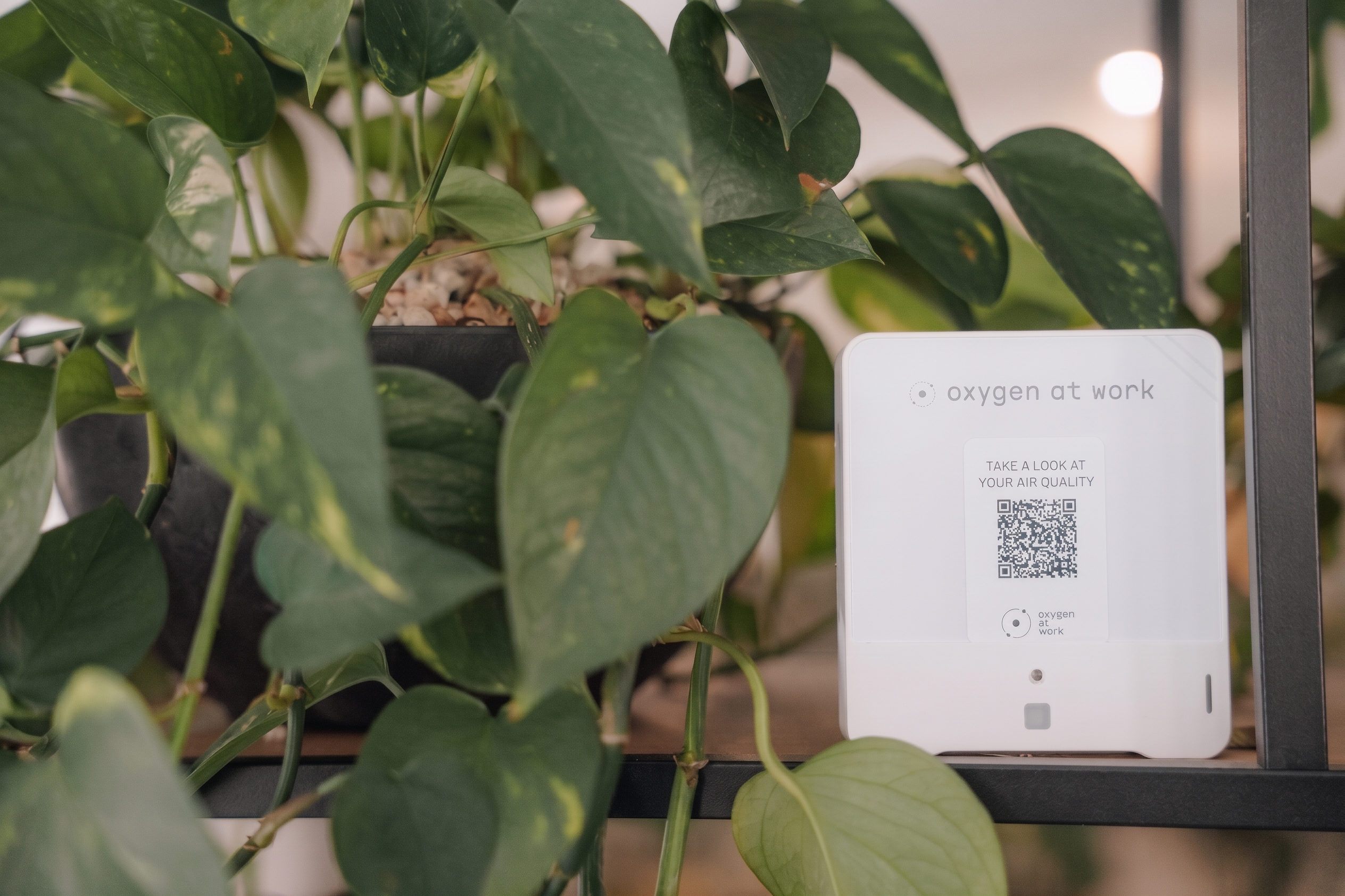
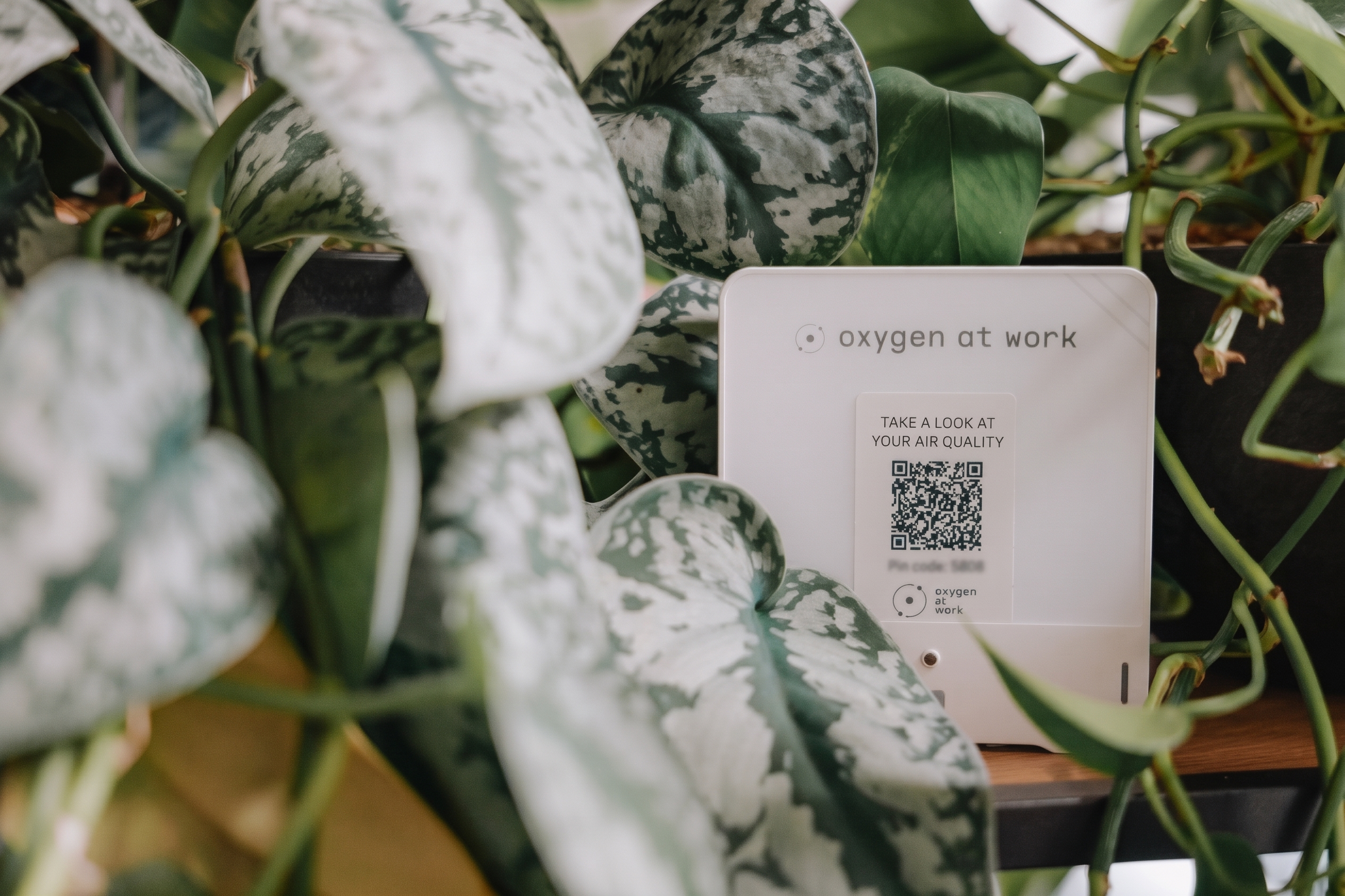
To know when ventilation is actually needed, our sensors provide reliable data. They show CO₂, humidity and temperature in real time, replacing gut feeling with clear data. It is often surprising how quickly the values change once they become visible.
Plants aren't a substitute for fresh air, but they make a valuable contribution. They release moisture into the air, which helps against dry air, and they improve wellbeing at work. The more plants, the greater the effect, which is why larger concepts such as Oxygen Gardens have the biggest impact.
How can you ensure healthy office air all year round?
Healthy office air depends on four factors: sufficient fresh air, balanced humidity, a comfortable temperature and a low level of pollutants. None of them is difficult to manage on its own. What matters is monitoring them continuously, as they change with the seasons, the weather and the occupancy of the office.
With reliable data, you can respond before concentration and wellbeing decline, creating an office where people feel comfortable and can work at their best. Read more about our sensors here and explore live data from a sensor.
Want to know how fresh the air in your office really is? Our team combines air quality sensors with a tailored greening concept, including care and monitoring.
Contact us here.


Ideally several times a day for a few minutes, with the windows wide open. Meeting rooms benefit from a short airing between meetings. The most reliable guide is the CO₂ level: once it rises above 1,000 ppm, it’s time to let in fresh air.
No. Plants are no substitute for fresh air, but they make a valuable contribution: they release moisture into the air, which helps against dry air, and they improve wellbeing at work. The best results come from combining regular ventilation with a well-planned greening concept.
Our sensors measure CO₂, humidity, temperature and light. If required, they can also record other factors. All values can be followed in real time on the dashboard.