Learn more

Learn more
Learn more
Zamioculcas zamiifolia
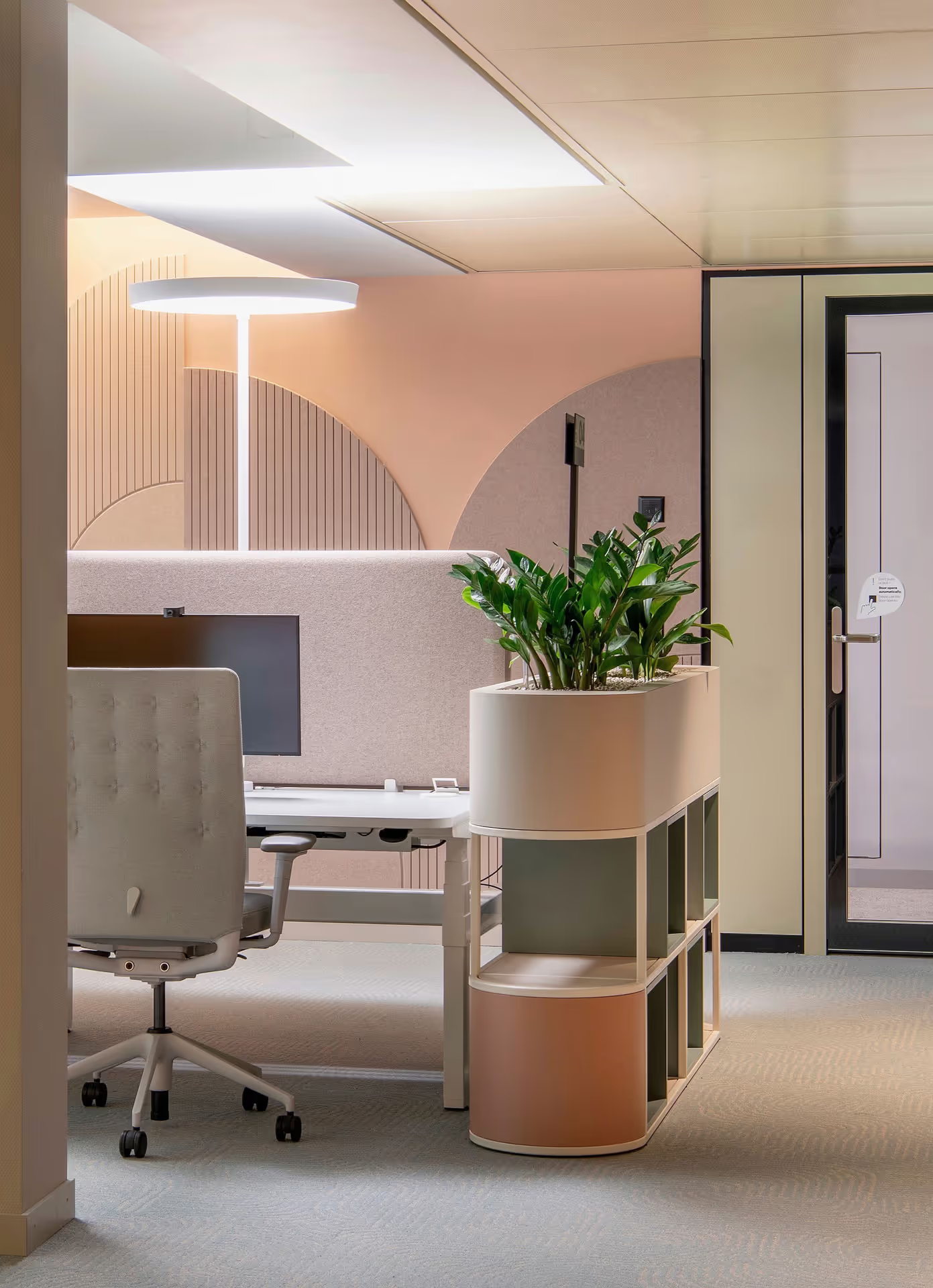

Why the Zamioculcas zamiifolia makes a great office plant
There is something wonderfully composed about the Zamioculcas zamiifolia. With its architectural silhouette, glossy deep-green leaves and quietly confident posture, this species feels tailor-made for contemporary workspaces. It stands upright like a small botanical sculpture, its elliptical leaflets catching just enough light to give the plant a subtle sheen. At roughly medium height and slender width, it integrates naturally into offices without imposing on surrounding furniture or circulation paths.
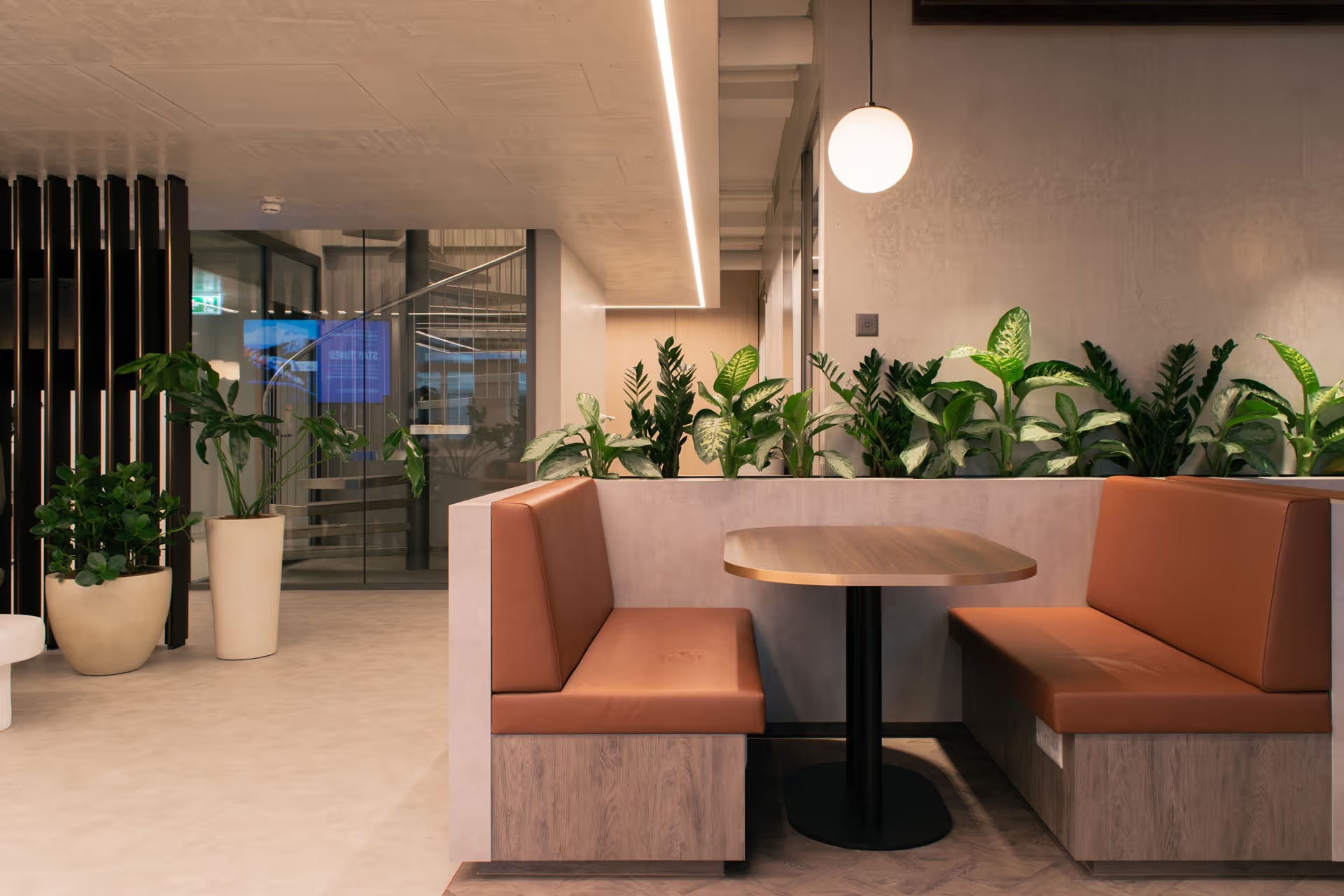
All you need to know about the Zamioculcas zamiifolia
The ZZ plant’s visual presence is one reason it has become a design darling in workplaces across Europe. It plays well with tactile surfaces, neutral palettes and minimalist interiors. Its stems grow rhythmically upward, creating the refined and slightly sculptural character that many architects love for reception areas, quiet corners or individual desks.
Equally compelling is how the Zamioculcas zamiifolia behaves under typical office conditions. Its physiology is adapted to environments where sunlight varies throughout the day and temperatures remain relatively stable. This makes it suitable for offices where light is moderate or filtered by screens, blinds or surrounding buildings. Because it remains visually consistent, growing in a slow and steady rhythm, it contributes to a calm overall atmosphere rather than commanding attention.
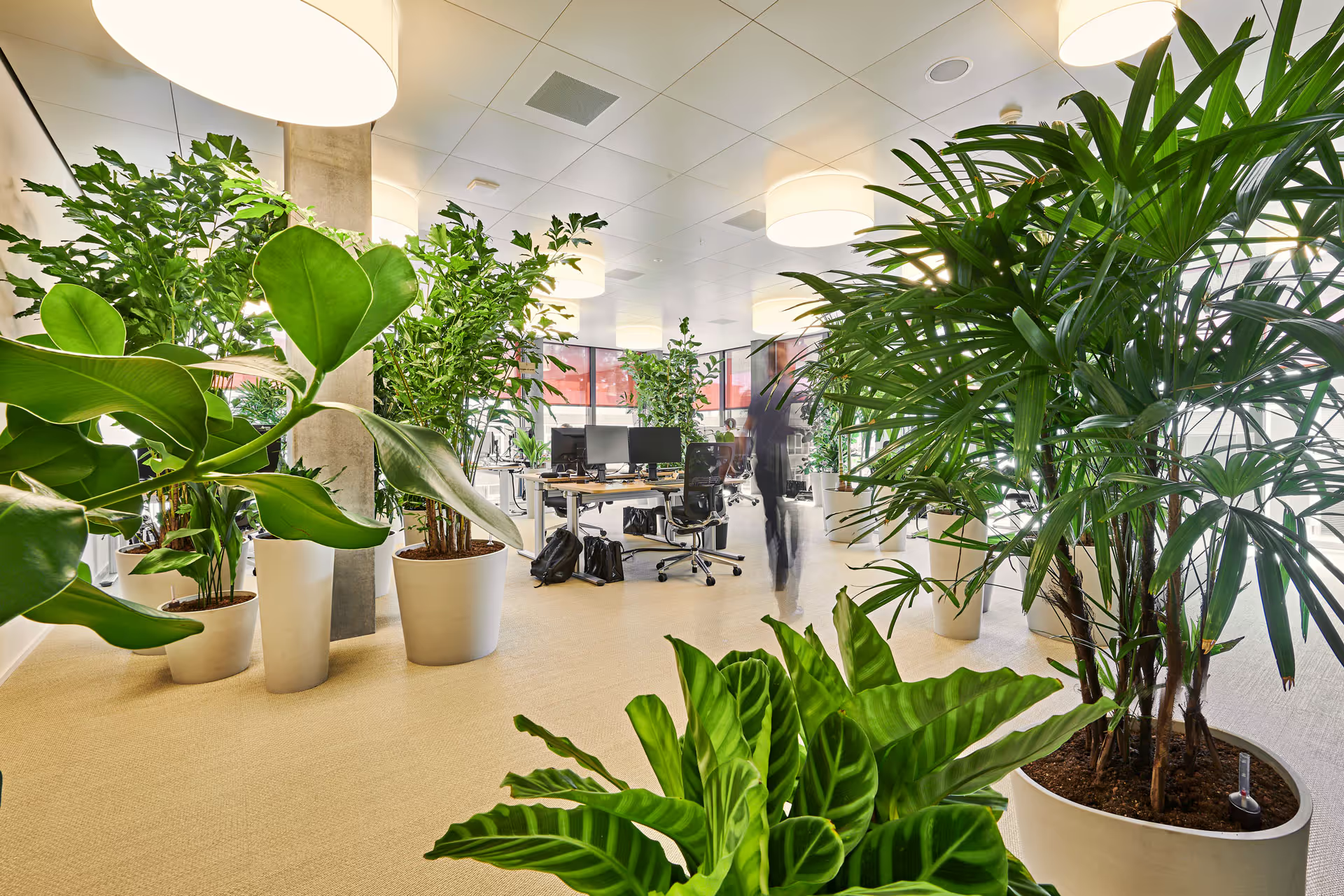
Other advantages add to its charm. The plant does not produce pollen, which makes it compatible with shared spaces. Its compact growth allows it to punctuate pathways or frame zones without expanding too broadly. And because it grows quietly and maintains its neat appearance for long periods, the Zamioculcas zamiifolia can even act as a subtle space divider in open-plan environments. It is one of those rare species that manages to be both resilient and elegant, a welcome companion for meeting rooms, corridors or any area that benefits from a touch of serenity.
Under what conditions does the Zamioculcas zamiifolia thrive?
The ZZ plant has its origins in the warm, dry regions of Eastern Africa, particularly in Kenya, Zimbabwe and South Africa. In these landscapes, it grows in grasslands and lowland forests where sunlight filters through overhead vegetation and air humidity fluctuates with the seasons. This background explains its fondness for steady temperatures and its tolerance for partial shade, making it well suited for indoor environments where natural light is present but rarely direct.
Watering
The plant should be watered sparingly, as it is equipped with an efficient water-storage system within its fleshy stems and leaves. It should be ensured that the substrate remains on the drier side to support the structure of its tuber-like rhizomes.
Fertilizing
The plant should be fertilized occasionally with a balanced nutrient supply to sustain its signature deep-green colour and robust leaf development. It should be ensured that any fertilization follows seasonal growth rhythms.
Cutting
Cutting is rarely required. The plant should be trimmed only when individual stems lose their structure or age naturally. Routine shaping is generally unnecessary due to the plant’s naturally tidy growth form.
Other Care
It should be ensured that the leaves remain clean so their surface can photosynthesize optimally. Dust removal keeps the plant’s glossy appearance intact and supports its physiological processes. Thanks to its resilience, the ZZ plant remains stable even when environmental conditions vary slightly.
How much water is evaporated by the Zamioculcas zamiifolia?
“Using research, real life tests and office air quality data, we approximate the effect of different plant species. Of course, the actual effect can vary depending on things like room conditions and the plant’s overall health.” George, Data Project Manager
The Zamioculcas zamiifolia contributes modestly yet consistently to indoor humidity. With its 80 cm height, 45 cm width and a leaf surface of 0.570 m², it evaporates roughly 1 litre of water per month. This positions it as a subtle humidifier, creating a gentle balancing effect in office environments where heating or cooling systems often reduce air moisture.
For comparison, a tall howea forsteriana measuring around 1.90 m in height and 0.7 m in width evaporates approximately 2.1 litres per month. While the ZZ plant offers a more understated atmospheric contribution, its slow water turnover reflects its natural adaptation to drier habitats. This makes its performance highly stable and predictable, especially in spaces where air humidity fluctuates.
An average Zamioculcas zamiifolia
Height: 80cm
Width: 45cm
Leaf Surface: 0.5 m²
Monthly Water Evaporation: 1 l
FAQs
Trouvez des réponses aux questions fréquentes sur nos plantes en pot et leur entretien.
Contactez-nous →Yes. The ZZ plant naturally thrives in partial shade and adapts well to offices where natural light is moderate or filtered. Its photosynthetic efficiency allows it to maintain a healthy appearance even in dimmer areas.
The plant contributes to indoor humidity through gentle water evaporation and supports air quality by maintaining a stable leaf surface for basic gas exchange. Although modest in scale, its effect is consistent and data-verified.
The plant grows slowly, producing new stems and leaves at a steady but calm pace. This makes it ideal for long-term placement in offices where a controlled and tidy growth pattern is preferred.
The plant produces no pollen and remains structurally stable, making it appropriate for shared indoor environments. It is commonly used in corporate settings due to its resilience and clean growth habit.
The species comes from Eastern Africa, particularly from regions in Kenya, Zimbabwe and South Africa. Its natural environment is warm, dry and partially shaded, which explains its compatibility with indoor office conditions.